 Skip to content
Introduction
Although traditional die casting machines have long been used to produce metal parts at scale, they are not always the right machines for small zinc alloy parts with thin walls, complex shapes, undercuts, or tight tolerances. For these applications, a traditional two-platen machine may require more machining, assembly, or tooling to achieve the final design.
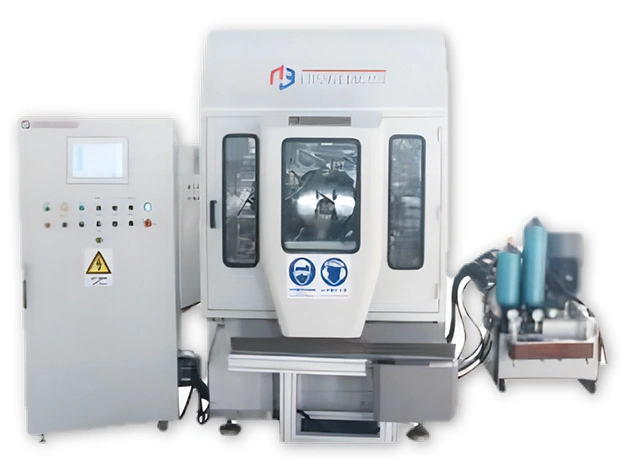
Hydraulic multi slide die casting machines solve this problem by closing the mold differently. Instead of using two die halves, multiple independent slides move in various directions to form the cavity and release the part. This allows larger geometries to be cast in one cycle with less secondary work.
Hydraulic multi slide die casting machines are fast becoming the norm for miniature hardware, precision connectors, electronic housings, automotive fittings, and other small-part products. This article discusses hydraulic multi slide die casting machines, where they are more efficient than standard die casting machines, and why they are used for small parts.
What Are Hydraulic Multi Slide Die Casting Machines? — A Technical Foundation
To understand why hydraulic multi slide die casting machines outperform conventional alternatives for small complex parts, it is essential to examine their fundamental design and operating principles. These systems represent a distinct category within the broader die casting equipment landscape.
Core Principle: Multiple Independently Moving Slides
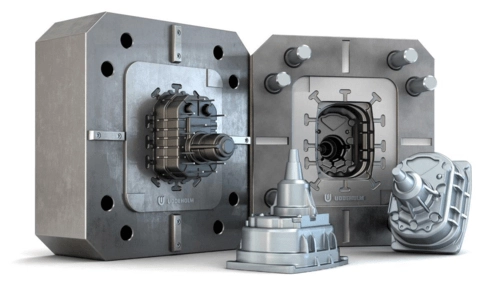
A conventional die casting machine uses two die halves: a fixed half and an ejector half that move toward each other along a single axis. The resulting die cavity is limited to the geometry that can be formed by this single parting line.
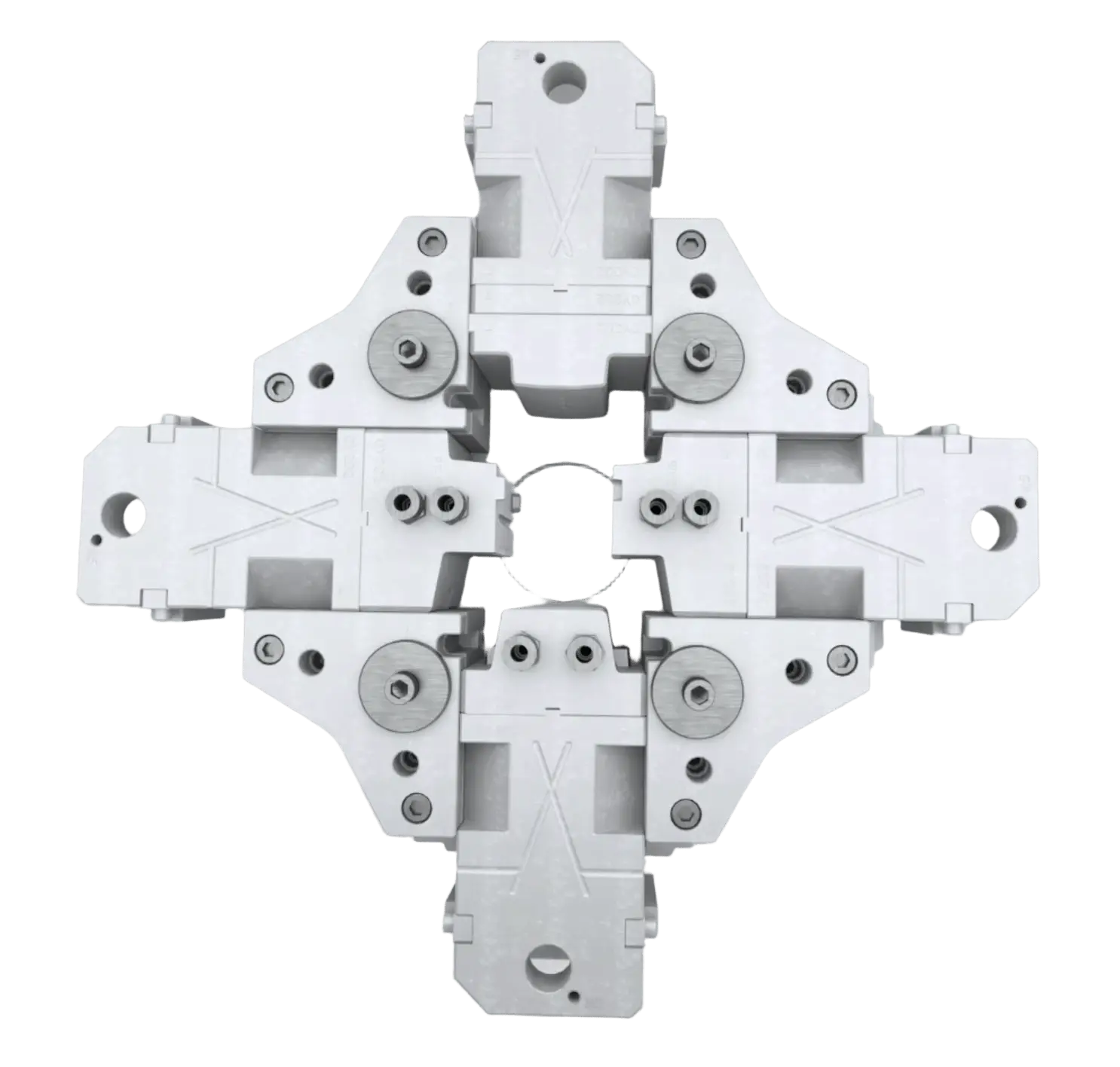
In contrast, a hydraulic multi slide die casting machine consists of two to six slides that move independently within a precision guide frame. Each slide carries its own die block, featuring a portion of the intended cavity or core. When the slides converge, all die sections mate precisely to form a complete, enclosed cavity. This multi-plane tooling approach opens up geometries that are impossible to achieve with conventional two-part molds. Hydraulic multi slide die casting machines are uniquely suited to parts requiring multiple undercuts.
The Hydraulic Advantage: Force Control and Repeatability
While electric multi slide machines offer energy savings of 50-70%, hydraulic systems remain the dominant choice for applications demanding high clamp tonnage and consistent force application. Hydraulic cylinders generate high output forces that are locked into position and supported by robust mechanical structures.
This capability translates directly to fewer part-to-part variations and the reliable production of “flash-free” castings. The term “flash” describes excess material that escapes between die parting lines. By maintaining consistent, precise clamping pressure across multiple slides, hydraulic systems minimize or eliminate flash, producing parts that often require no secondary trimming. Many production managers prefer hydraulic multi slide die casting machines for their superior force stability.
Key Machine Specifications
Hydraulic multi slide die casting machines are calibrated for small-part production. Representative models feature locking forces of eight tonnes with injection units capable of producing parts up to 90 grams or approximately 0.2 pounds. The maximum weight capacity of these systems typically reaches up to 1,800 grams (about four pounds), with linear dimensions up to 200 millimeters (approximately eight inches).
This size range is deliberate; multi slide technology is optimized for the small-scale, high-volume parts that conventional machines struggle to produce efficiently. When evaluating equipment options, hydraulic multi slide die casting machines offer the best fit for parts under eight inches.
Hydraulic Multi Slide vs. Conventional Die Casting — A Side-by-Side Comparison
Comparison Table
| Parameter | Hydraulic Multi Slide Die Casting | Conventional Hot Chamber Die Casting |
|---|---|---|
| Number of moving tool components | 2 to 6 independent slides | 2 die halves only |
| Die cavity formation | Slides converge from multiple directions simultaneously | Two halves close on a single axis |
| Runner system | Parting-line injection from all sides, short flow path | Gang runner from fixed die side, longer flow path |
| Part geometry capabilities | High — internal threads, side holes, and undercuts are cast directly in | Low — many features require secondary machining |
| Tolerance capability | As tight as ±0.01 mm (0.0004 inches) | ±0.05–0.10 mm typical |
| Secondary operations | Minimal — often flash-free, net shape | Often required — trimming, drilling, machining |
| Tooling cost | Can be less than half of conventional tools | Higher due to complex secondary feature requirements |
| Cycle time | Fast — optimized runner systems reduce cycle duration | Slower — longer flow paths extend solidification time |
| Ideal part size | Small (under 200 mm / 8 inches) | Small to large range |
Why the Differences Matter for Complex Small Parts
The structural differences between hydraulic multi slide die casting machines and conventional equipment have profound implications for the quality and cost of small complex parts. Choosing the right platform directly impacts production economics.
Slide count. Using four, five, or six independent slides dramatically expands geometric capabilities. Features such as internal threads, cross holes, undercuts, and complex thin-wall geometries can be cast directly into the part without secondary operations. Multi slide machines excel at producing net-shape or near-net-shape parts, often eliminating costly secondary machining. No other platform matches what hydraulic multi slide die casting machines can achieve in this area.
Runner system optimization. In conventional die casting, molten metal enters the cavity from a single point on the fixed die side, traveling a long distance through the runner system. Multi slide technology injects metal at the parting line from multiple sides simultaneously. This design delivers three critical benefits: shorter flow paths reduce pressure loss, minimize temperature drop before cavity filling, and enable higher production speeds. Hydraulic multi slide die casting machines maintain consistent fill pressures throughout each cycle.
Precision at scale. Human skin is 0.04 mm thick. A correctly aligned multi slide tool must maintain tolerances significantly finer than your thumbprint for flawless operation. This level of precision at the production scale is what truly distinguishes the technology. For parts requiring ±0.01 mm accuracy, hydraulic multi slide die casting machines are the only practical choice.
The Performance Advantages That Drive Industry Adoption
Manufacturers and engineers choose hydraulic multi slide die casting machines for four measurable performance advantages. These benefits directly translate to lower costs and higher quality.
Advantage 1 — Extreme Efficiency with 5-Second Cycle Times
Each production cycle on a modern hydraulic multi slide die casting machine is optimized for speed. From shot to solidified part to injection of the next shot, optimized runner system delivery and multi-axis tool movement reduce non-production time. In optimized zinc alloy applications, short cycle times can be achieved depending on part size and tooling design.
For a continuous production environment, this speed yields thousands of perfectly cast parts per day. Secondary operation elimination further accelerates throughput. Parts requiring no post-processing proceed immediately to packaging or assembly, compressing total manufacturing lead time. High-volume producers consistently rely on hydraulic multi slide die casting machines to meet demanding output targets.
Advantage 2 — Exceptional Dimensional Accuracy at ±0.01 mm
Hydraulic multi slide die casting machines achieve positioning accuracy of ±0.01 mm (0.0004 inches). This precision comes from the interaction of three controlled elements: multi slide tooling ensures each die block repeats its position exactly each cycle; controlled hydraulic injection pressure fills cavities before solidification; and short, balanced runner paths eliminate turbulence and premature solidification.
For industries where microscopic features lead to catastrophic assembly failures, this ±0.01 mm tolerance is a necessity, not a luxury. Automotive connector housings with pin pitch spacing, micro-gears requiring exact meshing, and medical device components with precise mating surfaces all demand this level of precision. Only hydraulic multi slide die casting machines deliver such consistency across millions of cycles.
Advantage 3 — Flash-Free Surface Quality
The traditional die casting process nearly always produces some flash (excess material extruded between die halves). Removing flash requires trimming operations, consumes labor, and risks surface damage or part distortion.
Hydraulic multi slide die casting machines, through optimized multi slide synergy technology, achieve flash-free surface quality directly from the tool. Minimizing the visible parting line and controlling clamp forces across multiple axes eliminates the conditions that create flash. Parts emerge requiring minimal post-processing to achieve exceptional surface aesthetics.
This is particularly valuable for consumer-facing products such as high-end electronic enclosures and smart home assemblies, where visible surface defects in raw components are unacceptable. Hydraulic multi slide die casting machines produce cosmetic surfaces that often require no additional finishing.
Advantage 4 — Superior Tool Longevity at 1.5 Million Cycles
Tooling costs represent a significant capital investment in any die casting operation. Hydraulic multi slide die casting machines not only achieve extreme precision and productivity but also protect the tooling investment through durability exceeding 1.5 million cycles.
This extreme longevity stems from hydraulic clamping systems that distribute forces uniformly across the die. Balanced force distribution reduces localized stress concentrations that cause cracking, wear, or deformation. Manufacturers benefit from predictable tooling replacement schedules, lower cost per part, and consistent part quality. The robust construction of hydraulic multi slide die casting machines ensures decades of reliable service.
Why Multi Slide Technology Excels at Complex Small Parts Specifically
Multi slide technology excels specifically at the small, intricate components that define modern product miniaturization. Three technical factors explain why hydraulic multi slide die casting machines dominate this niche.
Near-Net-Shape Forming Eliminates Secondary Operations
The ultimate objective of precision manufacturing is net-shape forming — producing parts that require no secondary processing before assembly. Hydraulic multi slide die casting machines achieve near-net-shape forming for complex structures, fundamentally eliminating traditional trimming processes.
Secondary operations such as drilling, tapping, reaming, and deburring each add cost, handling time, and quality risk. Eliminating these steps reduces production cost per part, accelerates goods-to-market time, and reduces work-in-progress inventory. This capability alone justifies the investment in hydraulic multi slide die casting machines for many manufacturers.
Thin-Wall Capabilities Unmatched by Conventional Methods
Hydraulic multi slide die casting machines produce thin-wall zinc alloy components that other casting methods would require manufacturing from two or more separate parts. The ability to form metal sections under 0.5 mm thickness is critical for industries prioritizing weight reduction — from portable electronic devices to automotive lightweighting.
Zinc alloys, in particular, exhibit excellent fluidity in their molten state, filling extremely thin cavities without premature solidification. Combined with the short runner paths of multi slide injection, this produces thin-wall parts with superior surface finish and mechanical integrity. Design engineers specify hydraulic multi slide die casting machines when a wall thickness below 0.5 mm is required.
Complex Internal Features Cast Directly
One of the most significant limitations of conventional die casting is the inability to cast internal features such as threads, cross-holes, and undercuts. Multi slide technology overcomes this limitation by allowing each slide to carry different die components, creating the entire part volume in a single closing motion.
Multi slide tools can cast both internal and external threads without the need for secondary machining. For high-volume threaded parts, eliminating a tapping operation reduces cost per part and eliminates the quality risk of misaligned or broken taps. Hydraulic multi slide die casting machines turn complex assemblies into single-component castings.
Industry Applications — Small Complex Parts Across Critical Sectors
Automotive Connectors and Sensor Housings
Modern vehicles contain hundreds of electronic connectors and sensors, each requiring precision-machined or cast housings. As automotive architectures evolve toward higher voltage systems and increased electronic content, demand for reliable zinc alloy connector housings grows.
Hydraulic multi slide die casting machines produce automotive connector housings with consistent pin spacing, thin-wall sections, and complex internal geometries. With tolerance requirements tight enough to ensure proper terminal alignment across thousands of mating cycles, multi slide technology is the preferred production method. Leading automotive suppliers have standardized on hydraulic multi slide die casting machines for these critical components.
Micro-Gears and Precision Mechanical Assemblies
Micro-gears of 5 mm or smaller diameter require absolute precision. A single defective gear tooth causes drive train failure. Hydraulic multi slide die casting machines produce micro-gears directly to final dimensions without secondary gear cutting.
The economic implications are substantial. Cutting each micro-gear individually from bar stock consumes significant machine time and generates material waste. Multi slide casting produces gears at five seconds per cycle with near-zero material waste. Hydraulic multi slide die casting machines make micro-gear production economically viable at scale.
High-End Electronic Enclosures
Smartwatches, hearing aids, wireless earbuds, and portable medical devices all require compact, robust enclosures protecting sensitive electronics while maintaining aesthetic quality. Hydraulic multi slide die casting machines produce these enclosures with thin walls for weight minimization, integral mounting features, and flash-free surfaces.
The electronics industry values multi slide production for dimensional consistency across high-volume production runs. Enclosure-to-assembly fit without shimming or rework reduces final assembly cost. Many consumer electronics brands rely on hydraulic multi slide die casting machines for their premium product lines.
Medical Device Components
Surgical instruments, implantable device housings, and diagnostic equipment components operate under strict regulatory and performance requirements. Hydraulic multi slide die casting machines meet these demands through superior surface finish (minimizing bacterial trapping sites), exceptional dimensional repeatability (ensuring device function), and reduced secondary operations (lowering contamination risk).
The medical device industry also values zinc alloys, which can be sterilized through standard processes without degradation. Hydraulic multi slide die casting machines provide the documentation and traceability that medical quality systems require.
Locks, Hardware, and Smart Home Assemblies
The locks and hardware industry pioneered many multi slide die casting applications. Hydraulic multi slide die casting machines produce lock cylinders, key housings, latch mechanisms, and decorative hardware finishes. Smart home assemblies — electronic lock actuators, sensor mounting brackets, and connectivity module housings — also benefit from multi slide capabilities.
For hardware manufacturers, multi slide technology delivers the precision required for security-critical mechanisms while producing flash-free surface finishes that meet consumer aesthetic expectations. Hydraulic multi slide die casting machines have become the industry standard for premium locksets.
Technical Specifications That Define Performance
Core Machine Parameters
-
Clamping unit — Hydraulic multi slide system; locking forces typically 8–50 tonnes depending on model
-
Injection unit — High-speed hot chamber system optimized for zinc alloys
-
Cycle time — As low as 5 seconds
-
Maximum part weight — Up to 1,800 grams (4 pounds)
-
Maximum part dimensions — Linear sizes up to 200 mm (8 inches)
Precision and Tolerances
-
Positioning accuracy — ±0.01 mm (0.0004 inches)
-
Tool life — 1.5 million cycles minimum under normal operating conditions
-
Surface quality — Flash-free from the tool
Hydraulic multi slide die casting machines consistently achieve these metrics across millions of production cycles.
Cost and ROI Analysis — Why Multi Slide Makes Economic Sense
Per-Part Cost Reduction
Hydraulic multi slide die casting machines reduce per-part manufacturing cost through three mechanisms. Lower tooling costs (multi slide tools cost less than half of conventional tools by casting complete features without secondary operations). Reduced labor cost per part through automation of the entire casting cycle. Lower material waste through optimized runner systems and near-zero trimming scrap.
When calculating ROI, hydraulic multi slide die casting machines often pay for themselves within 18 to 24 months in high-volume environments.
Tooling Investment Comparison
A conventional die casting tool for the same small complex part often costs substantially more because mating two halves in a single plane cannot produce undercuts or cross-holes, requiring expensive side-action mechanisms or secondary operations. Multi slide tools are simpler and lower cost, a capital advantage that benefits both high-volume production and lower-volume specialty runs. Hydraulic multi slide die casting machines reduce the barrier to entry for complex part production.
Justifying the Machine Investment
The hydraulic multi slide die casting machine represents a significant capital investment. ROI justification should factor in cost savings from eliminated secondary operations, productivity improvements from faster cycle times (reducing required machine count for the same annual volume), scrap reduction from process repeatability, and lower maintenance costs due to force-balanced tool operation extending tool life.
FAQ
Q1: What materials are typically used in multi slide die casting?
Zinc alloys are the most common choice because they offer excellent fluidity, dimensional stability, and surface finish. Some applications may also use specialty alloys depending on product requirements.
Q2: How is a multi slide machine different from conventional die casting machines?
Conventional systems usually open on two die halves. Multi slide machines use several independently moving slides, allowing more complex geometries, side features, and undercuts to be formed directly in the tool.
Q3: Are secondary operations still needed after casting?
It depends on part design and tolerance requirements. Many small zinc components can be produced close to the final shape, which may reduce trimming, drilling, or machining steps.
Q4: Should I choose hydraulic or electric multi slide equipment?
Hydraulic systems are often preferred for higher clamping force and robust continuous production. Electric systems may offer lower energy consumption and quieter operation. The better choice depends on production volume and part complexity.
Q5: What part sizes are best suited for this process?
Multi slide die casting is generally best for small to medium zinc components with intricate details, thin walls, or multiple side features.
Conclusion
Traditional die casting machines remain effective for many standard parts, but they may be less efficient when a component includes undercuts, thin walls, side features, or tight repeatability requirements.
Hydraulic multi slide die casting machines solve these challenges through multi-directional tooling movement, shorter metal flow paths, and reduced need for secondary machining. For zinc alloy connectors, locks, housings, fittings, and other intricate small components, this process can improve consistency and overall production efficiency.
When selecting equipment, manufacturers should compare part geometry, annual volume, tooling complexity, maintenance support, and operator skill requirements. In the right application, multi slide technology can offer a clear long-term advantage over conventional die casting setups.
If you are planning a new small-part production line, requesting a sample feasibility review based on your drawings is often the best first step.