 Skip to content
Introduction
In mechanical power transmission, coupling blocks play a vital role in connecting rotating shafts while compensating for misalignment and absorbing shock loads. Engineers often ask: Which material and manufacturing process provide the best combination of strength, precision, durability, and cost?
Zinc die casting coupling blocks have become a preferred choice across industrial machinery applications. By leveraging the inherent properties of zinc alloys and the efficiency of the die casting process, these components deliver performance benefits that alternatives—aluminum, steel, or plastic—cannot match. This guide explores why engineers consistently select zinc die casting coupling blocks for machinery, how the zinc die casting process ensures reliability, and tips for choosing the right industrial zinc die casting coupling blocks for your equipment.
What Are Zinc Die Casting Coupling Blocks?
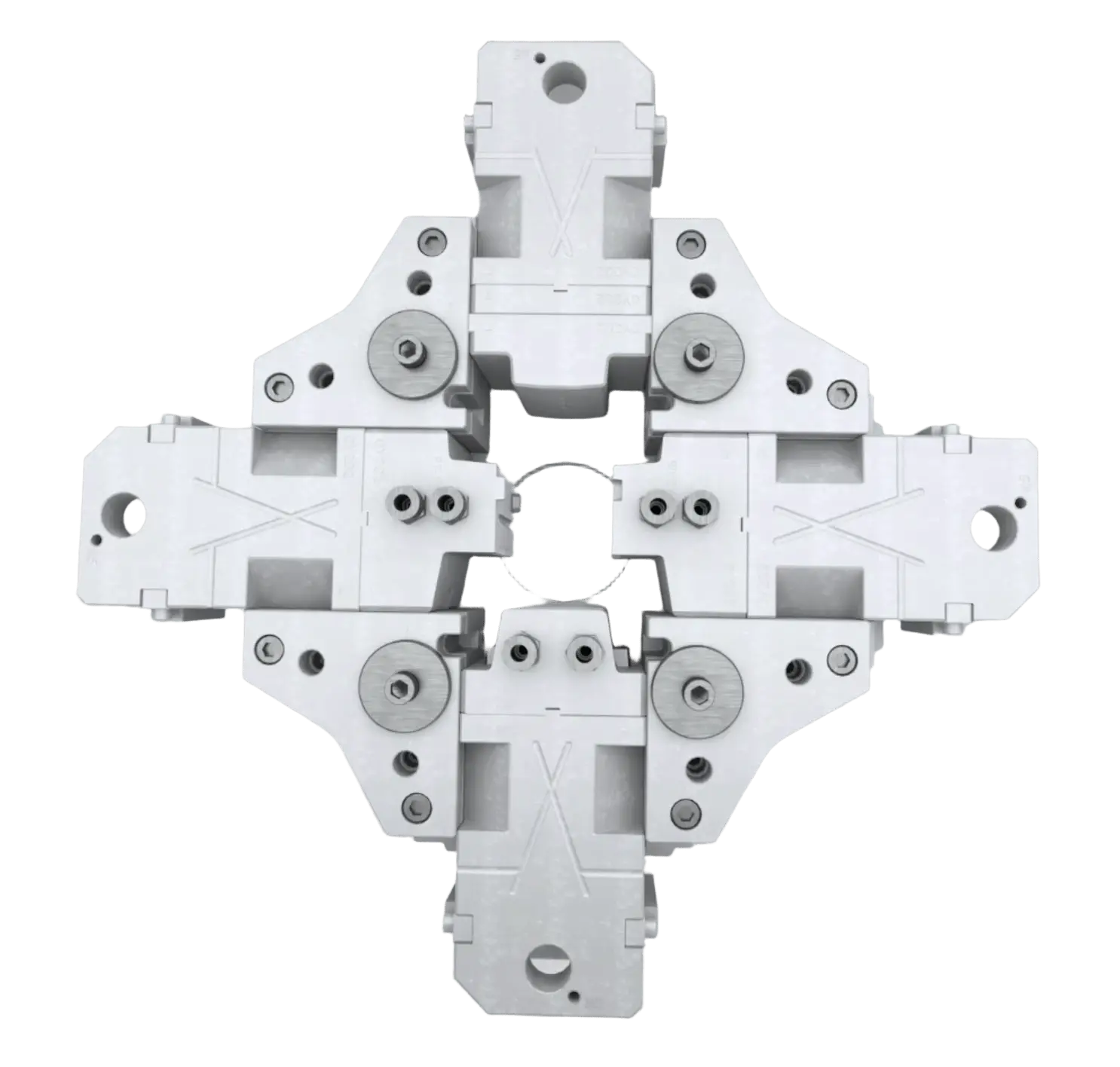
A coupling block is a precision-engineered component that joins two rotating shafts in a drive train, transmitting torque while accommodating misalignment. The zinc die casting coupling block is manufactured through high-pressure injection of molten zinc alloy into precision steel dies. Zinc’s low melting point (∼420–450°C) and superior fluidity make it ideal for creating thin-walled, complex, and high-strength parts with fine features and tight tolerances.
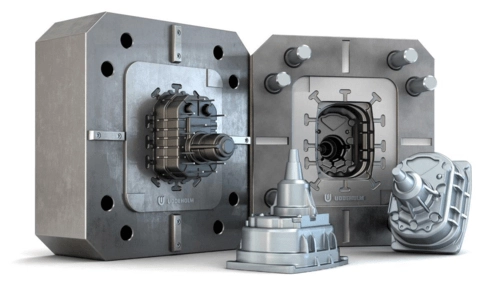
Connecting elements are typical areas of application for zinc die casting. In the example of an element of a pneumatic maintenance unit, a pressure-tight structure is required. The casting is carried out without burrs, as burrs that might come loose later would cause the machine to malfunction.
Die cast coupling blocks appear in many sectors, including:
-
Pneumatic and hydraulic control units requiring pressure-tight connections
-
Conveyor systems requiring reliable torque transmission
-
Packaging machinery with high cycle rates
-
Agricultural equipment operating in demanding conditions
-
Medical devices require precision and cleanliness

The Zinc Die Casting Process for Coupling Blocks
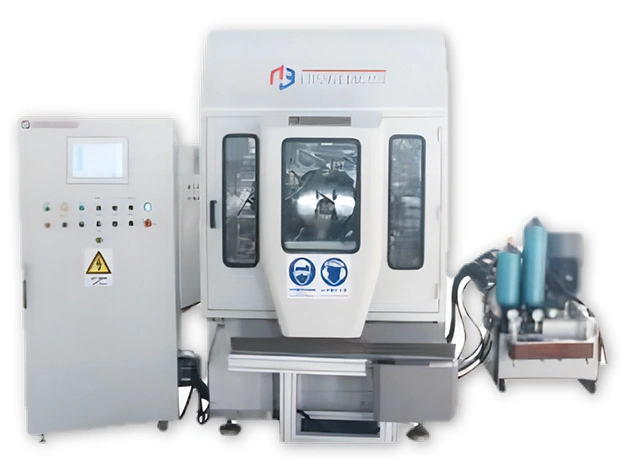
Zinc die casting coupling blocks are produced through the hot chamber die casting method, which offers superior efficiency for high-volume production. In this process, molten zinc alloy is drawn from a furnace into a shot chamber, then injected at high speed and high pressure into a steel die. The rapid cooling cycle allows for fast production rates—typically four to five shots per minute for conventional machines, with multi-slide systems achieving even higher speeds. Zinc die casting is a cost-effective manufacturing process, especially for high-volume production runs. The speed of the process allows for the rapid production of parts, reducing labor costs and lead times.
After injection, the coupling block is ejected, trimmed, and may undergo finishing operations such as plating or coating for corrosion resistance. The entire process delivers net-shape manufacturing that often eliminates secondary machining steps—a major cost advantage.
Key Process Advantages
-
Cycle time: Hot chamber zinc die casting yields four to five shots per minute versus two to three shots per minute for aluminum cold chamber.
-
Tool life: Due to zinc’s low melting temperature, dies can last up to ten times longer than those used for aluminum and about five times longer than those used for magnesium.
-
Near-net shape: The ability to achieve small details and tight tolerances directly through die casting allows the production of finished parts without the additional costs of subsequent machining.
Process Comparison: Zinc vs. Aluminum vs. Steel
| Parameter | Zinc Die Casting | Aluminum Die Casting | Machined Steel |
|---|---|---|---|
| Melting point | 420–450°C | 660°C | N/A |
| Cycle time | 4-5 shots/min | 2-3 shots/min | N/A (per piece machining) |
| Tool life | Very long (10× aluminum) | Moderate | N/A |
| Secondary ops | Minimal | Often required | Extensive |
| Energy cost per part | Low | Medium | High |
Material Properties: Why Zinc Alloys Excel for Coupling Blocks
The performance of a zinc die casting coupling block begins at the material level. ZAMAK alloys (a family of zinc-aluminum-magnesium-copper alloys) are engineered for specific mechanical property profiles.
Comparison of ZAMAK Alloys
| Alloy | Ultimate Tensile (ksi) | Yield Strength (ksi) | Hardness (BHN) | Impact Strength (ft-lb) |
|---|---|---|---|---|
| ZAMAK 3 | 41 | 32 | 82 | 43 |
| ZAMAK 5 | 48 | 39 | 91 | 48 |
| ZA-8 | 54 | 41–43 | 100–106 | 24–35 |
The most common zinc die-casting alloy is ZAMAK 3, which provides good castability and mechanical properties. For applications requiring higher strength and hardness, ZAMAK 5 offers superior performance, while ZA-8 provides the highest tensile strength among hot-chamber zinc alloys. ZAMAK 5 is the most widely used zinc alloy in Europe, offering higher strength and hardness than ZAMAK 3.
Alloy 2 offers the highest strength and hardness of the ZAMAK family, with ultimate tensile strength exceeding 40 ksi and yield strength over 30 ksi. For the highest mechanical demands, EZAC alloy delivers an exceptional 57 ksi yield strength and 120 BHN hardness—approximately 2.5 times stronger than common aluminum alloy A380.
Zinc alloys are stronger than aluminum and magnesium alloys at room temperature. Strength is inherent in the alloy itself and does not require secondary processing like most aluminum alloys—this saves on the overall cost per part.
Real-World Material Selection Example
Consider a hydraulic coupling block operating at 3,000 psi. Using ZAMAK 5 (yield strength 39 ksi) provides a safety factor of over 4:1 when properly designed. The same component in aluminum A380 (yield strength 23 ksi) would require thicker walls or risk creep failure under sustained pressure. Engineers consistently select zinc for pressure-containing applications because of this inherent strength advantage.
Why Zinc Die Casting Coupling Blocks Deliver Superior Durability
Durability is the primary reason engineers specify durable zinc die casting coupling blocks for demanding applications. Several material and processing factors contribute to this performance advantage.
Strength and Hardness
Zinc alloy die castings are much more often pressure-tight than those die cast from aluminum alloy. This means that fluid-handling devices made in zinc alloy are much less likely to leak than those made in aluminum. For hydraulic coupling blocks that must contain pressurized fluid without seepage, this property is critical.
For a die-cast material, zinc is one of the strongest and toughest options available, especially when you factor in impact resistance, wear resistance, and dimensional stability. Zinc is precise, iron is durable, and steel is strong.
Wear Resistance
Coupling blocks experience continuous sliding contact and torque transmission. Zinc’s natural bearing properties and hardness characteristics provide excellent wear resistance. ZAMAK 2 offers the highest strength and hardness of the Zamak family. ACuZinc5, developed by General Motors, is best known for its creep performance, surface hardness, and lubricity—making it particularly suitable for high-wear coupling applications.
Dimensional Stability
Zinc alloys have excellent dimensional stability characteristics in their as-cast condition. ZA-27 may require artificial aging treatment (heating to 95°C for 24 hours) where exceptional tolerances are required. For die casters concerned about the aging characteristics of standard zinc alloys, artificial aging may be essential for maintaining critical dimensions, particularly if the part is to be machined, due to the creep characteristics of zinc.
Case Study: Extended Service Life
A manufacturer of pneumatic conveying equipment switched from aluminum to zinc die casting coupling blocks for their high-cycle sorting machinery. Previously, aluminum blocks required replacement every 6 months due to thread wear and leakage. The zinc blocks, after 24 months of continuous operation, showed no measurable wear and maintained pressure integrity. The initial tooling cost was recovered in the first year through reduced downtime and replacement part inventory.
Precision and Tolerances: The Net-Shape Advantage
Precision zinc die casting coupling blocks achieve tolerances that rival machined components while eliminating the need for secondary operations.
Zinc alloys are castable to closer tolerances than any other metal or molded plastic. Zinc die casting can produce repeatability of less than ±0.001” for small components, often rivaling machining tolerances.
Zinc die casting can reliably achieve tighter dimensional tolerances than many other die cast materials, often in the range of ±0.1 mm to ±0.5 mm for typical precision features. For very small, high-precision components, tolerances as tight as ±0.025 mm can be reached. Few other processes can easily achieve the same net shape performance, presenting the opportunity to reduce or eliminate machining.
Specific benefits include:
-
Zero draft capability: Zinc components can sometimes be cast with zero draft angles, a major advantage when producing parts in moving mechanical contacts such as gears and coupling blocks.
-
Thin-wall capability: Wall thicknesses of 0.15mm for die casting are being produced, resulting in smaller, lighter, low-cost components.
-
Long tool life: Despite complex designs, ZAMAK die casting molds withstand a high number of cycles, ensuring high production volumes.
Industrial Zinc Die Casting Coupling Blocks by Application
Industrial zinc die casting coupling blocks perform reliably across demanding sectors.
Hydraulic and Pneumatic Systems
Zinc alloy die castings are pressure-tight, meaning fluid-handling devices made in zinc alloy are much less likely to leak than those made in aluminum. Coupling elements in pneumatic maintenance units require burr-free casting to prevent malfunction.
Power Transmission in Heavy Machinery
Couplings in rotary power transmission connect rotating components to transfer rotational motion and torque. They enable efficient power transmission while offering flexibility and protection against misalignment and mechanical overload. Zinc die casting allows near-net-shape casting largely without reworking. The gearbox of a high-pressure cleaner demonstrates cost-effectiveness—the new design reduced weight by 22 percent while retaining the same function.
Automotive and Construction Equipment
Zinc alloys are used to create durable and complex parts, including door locks, engine components, and transmission housings. Automotive powertrain applications benefit from zinc’s superior tensile strength at normal temperatures.
Material Alternatives Comparison
| Property | Zinc Die Casting | Aluminum Die Casting | Machined Steel |
|---|---|---|---|
| Precision | Excellent (±0.001″) | Good | Excellent |
| Tool life | Long (10× aluminum) | Shorter | N/A |
| Pressure-tightness | Excellent | Moderate | Excellent |
| Corrosion resistance | Good | Excellent | Poor (requires coating) |
| Weight | Heavier | Lightweight | Heavy |
| Cost per part (high volume) | Low | Moderate | High |
Six Advantages of High-Strength Zinc Die Casting Coupling Blocks
High-strength zinc die casting coupling blocks deliver six distinct performance advantages.
1. Superior strength-to-cost ratio. Zinc provides a better combination of strength, toughness, rigidity, bearing performance, and economical castability than other alloys.
2. High precision and detail. The high-pressure injection process ensures molten metal fills every crevice, creating intricate designs often difficult to achieve with other methods.
3. Excellent surface finish. Zinc die cast parts have a smooth surface that reduces post-processing.
4. Cost-effectiveness. Short cycle times, long tool life, and joint-free designs minimize per-part cost.
5. Pressure-tight sealing. Critical for hydraulic coupling blocks that must contain pressurized fluid without seepage.
6. Full recyclability. Zinc die casting parts can be recycled at the end of their service life.
How to Select Industrial Zinc Die Casting Coupling Blocks
Follow this decision framework when sourcing high-strength zinc die casting coupling blocks.
Step 1 – Determine Load Requirements
Calculate torque transmission needs. For heavy loads (conveyors, crushers), select higher-strength alloys like ZAMAK 5 or ZA-8.
Step 2 – Assess Operating Environment
For oil/hydraulic fluid exposure, require pressure-tight certified castings. For outdoor or washdown applications, specify corrosion-resistant plating (nickel or zinc).
Step 3 – Verify Tolerances
Zinc die casting can achieve repeatability of less than ±0.001″ (0.0254 mm) for small components, often eliminating post-machining costs.
Step 4 – Match Alloy to Application
-
ZAMAK 3: General-purpose matching strength and ductility.
-
ZAMAK 5: Higher strength and hardness for demanding industrial use.
-
ZA-8: High strength, can be hot-chamber die cast for flexibility.
-
EZAC: Highest yield strength (57 ksi) and creep resistance for extreme applications.
Step 5 – Consider Finishing Requirements
Zinc die cast components offer excellent conditions for surface finishing with high-quality surfaces suitable for plating, painting, or coating.
Step 6 – Evaluate Long-Term Costs
Consider the total cost of ownership: zinc’s longer tool life, elimination of secondary operations, and shorter cycle times. Energy savings from lower melting temperatures (∼420–450°C vs ∼660°C for aluminum) provide additional reductions in production energy consumption.
Market Trends and Future Outlook
The global zinc die casting market is projected to grow at a CAGR of 5-6% through 2030, driven by demand from automotive, industrial machinery, and consumer electronics sectors. Coupling blocks represent a significant segment of this growth, as engineers increasingly recognize zinc’s ability to replace more expensive machined steel components without compromising reliability. Advances in hot chamber die casting technology are enabling larger, more complex coupling blocks with even tighter tolerances. New zinc alloys with improved creep resistance are expanding the application range into higher-temperature environments previously dominated by aluminum.
Frequently Asked Questions
Q1: Why are zinc die casting coupling blocks better than aluminum for hydraulic applications?
Zinc alloy die castings are pressure-tight, making fluid-handling devices less likely to leak. Zinc’s superior dimensional stability ensures consistent performance across temperature ranges.
Q2: Can industrial zinc die casting coupling blocks replace machined steel parts?
Often yes for medium-strength applications where complex geometry and high-volume production matter. Zinc’s net-shape casting eliminates machining costs, and tool life can be significantly longer than that of steel machining.
Q3: What are the high-strength options for industrial zinc die casting coupling blocks?
EZAC alloy offers 57 ksi yield strength and 120 BHN, approximately 2.5 times stronger than common A380 aluminum. ZAMAK 5 and ZA-8 also provide excellent high-strength options with 39–43 ksi yield strength.
Q4: How precise can a precision zinc die casting coupling block be?
Zinc die casting achieves repeatability of less than ±0.001″ (0.0254 mm) for small components, often matching machining tolerances without secondary operations.
Q5: How do durable zinc die casting coupling blocks reduce total manufacturing cost?
Cost savings come from eliminating secondary machining, achieving 4–5 shots per minute cycle times with tool life up to 10× aluminum dies, and avoiding corrosion-resistant coatings.
Conclusion
A zinc die casting coupling block delivers the combination of strength, precision, durability, and cost efficiency that engineers demand in modern industrial drive systems. From ZAMAK 3’s versatile balance of properties to the ultra-high-strength performance of EZAC alloys, zinc provides material options matched to the demands of hydraulic systems, power transmission, and heavy machinery. The hot chamber die casting process achieves repeatable tolerances, rapid cycle times, and near-net shape accuracy that are often superior to other manufacturing methods.
Ready to engineer durable zinc die casting coupling blocks for your industrial machinery? Changzhou Cydie Casting Co., Ltd. specializes in ZAMAK and ZA alloy coupling blocks with custom alloy selection, precision tolerancing, and complete finishing capabilities.
We’re here to help with:
-
Technical specifications and alloy recommendations
-
Application-specific design support
-
Sample orders for testing
👉 Contact us to discuss your coupling project. Enhance your machine’s reliability with industrial zinc die casting coupling blocks built for lasting performance.