 Skip to content
Introduction
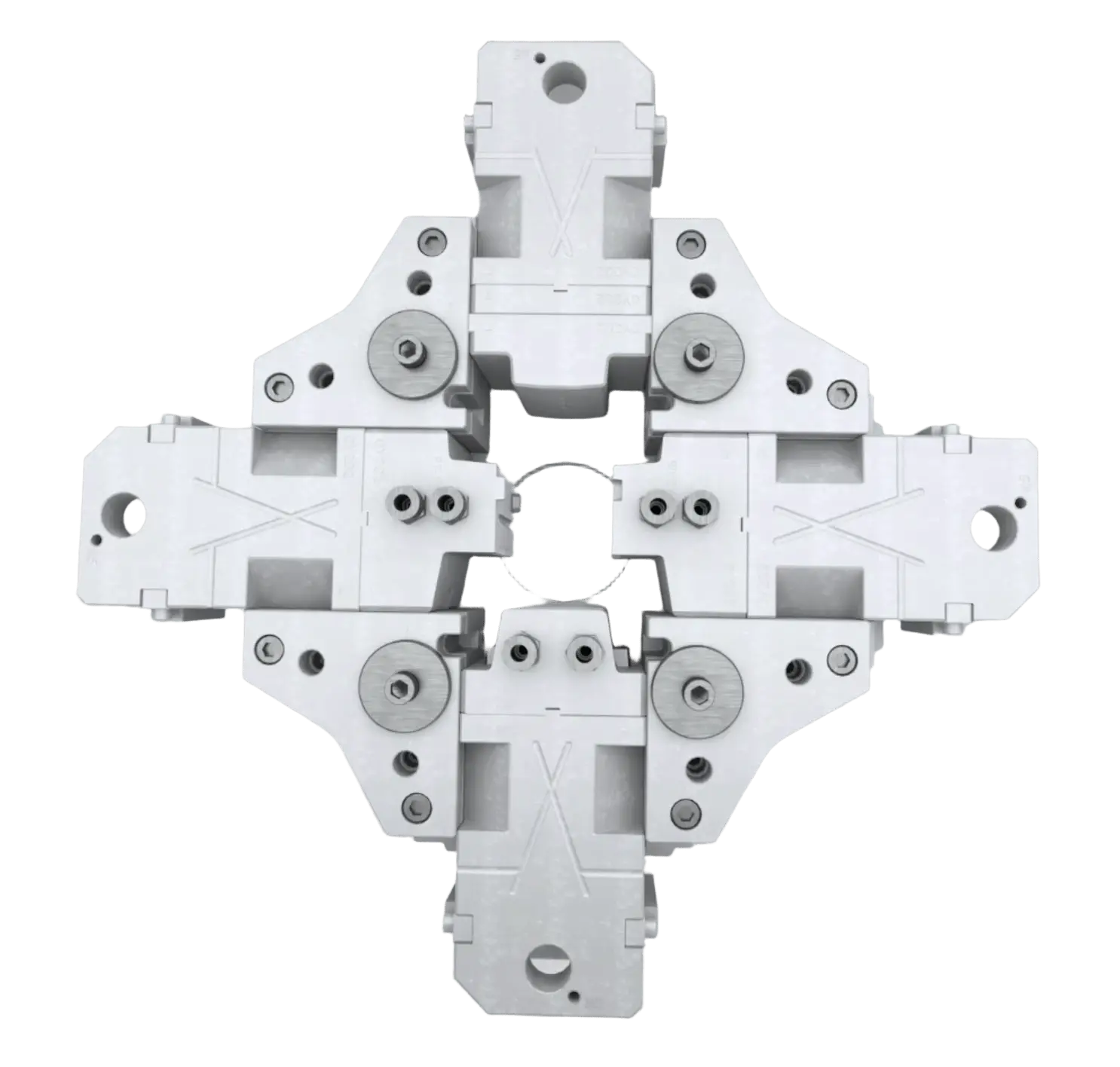
If your manufacturing process involves small, complex metal parts with tight tolerances, here’s the short answer: multi slide die casting machines provide one of the most efficient ways to achieve the precision, speed, and production consistency required in modern manufacturing. A multi slide die casting machine uses multiple independently moving slides—typically four positioned perpendicularly—allowing complex geometries such as internal and external threads, undercuts, and thin walls to be cast directly into the component while significantly reducing secondary machining operations.
For parts under 400 grams—which account for a large share of precision components used in automotive electronics, medical devices, telecommunications, and consumer products—a multi slide die casting machine offers a highly practical balance of dimensional accuracy, tooling efficiency, material utilization, and labor cost control. Compared with conventional die casting systems, it can support faster cycle times and more stable high-volume production for intricate small metal parts. In the following sections, we’ll explore how this technology works, where it performs best, and why more manufacturers are adopting it for precision component production.
What Exactly Is a Multi Slide Die Casting Machine?
To understand why precision components rely on this technology, it’s important to first understand how a multi slide die casting machine works. At its core, this system is a specialized form of hot chamber die casting that uses multiple independently moving slides—typically four or more—arranged around a central cavity. Each slide contains a tool steel insert that forms one section of the component. Multi slide die casting machines are designed to produce near-net shape or net shape parts with minimal secondary processing.
During production, molten metal—most commonly zinc alloy, though magnesium and lead alloys are also compatible—is injected into the mold cavity. All slides close simultaneously from multiple directions to lock the mold in place. This synchronized movement is essential for maintaining dimensional consistency, reducing visible parting lines, and supporting thin wall or highly detailed geometries.
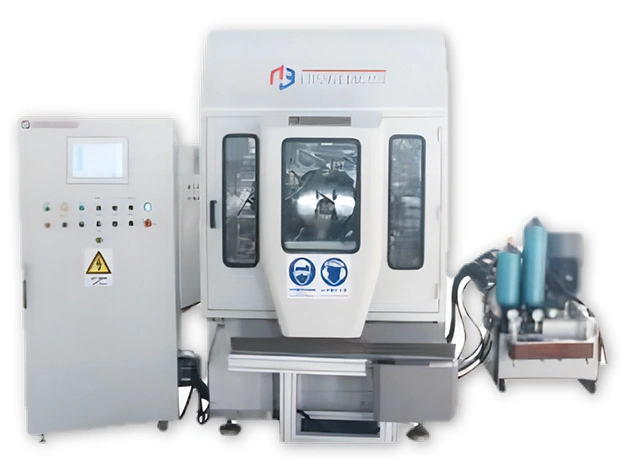
CYMACH’s hydraulic multi slide die casting machine further improves production efficiency through patented synergy technology. Key performance advantages include:
- Fast production cycles of approximately 5 seconds
- Precision tolerances up to ±0.01 mm
- Machine durability rated for up to 1.5 million cycles
This combination of speed, precision, and long-term stability makes multi slide systems well-suited for high-volume precision manufacturing. Compared with standard hot chamber die casting machines, the multi slide structure also helps reduce material waste through shorter runner systems and smaller overflow wells.

Why Conventional Die Casting Falls Short
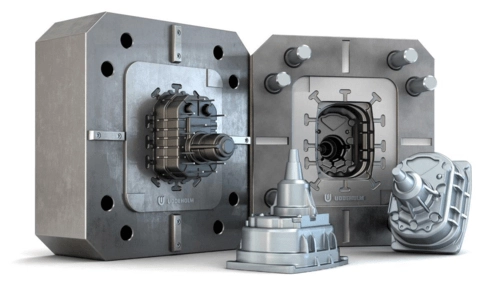
The limitations of conventional die casting become more noticeable when producing small and intricate metal components. Traditional hot chamber die casting systems rely on a two part mold consisting of a fixed half and a moving half. While suitable for larger and simpler products, this design has limitations when manufacturing precision components with complex geometries.
A multi slide die casting machine approaches the cavity from four or more directions simultaneously, allowing more complex features to be formed directly during casting. This reduces the need for additional machining and improves production consistency.
Common limitations of conventional die casting include:
- Limited molding directions, making internal threads and side holes difficult to form
- Additional secondary operations such as drilling, tapping, and milling
- Wider tolerances, typically around ±0.003 to ±0.005 inches
- Increased scrap rates caused by flash or incomplete filling in thin-wall parts
Multi slide die casting technology can routinely achieve tolerances of ±0.025 mm or better, while advanced hydraulic systems, such as CYMACH’s machines, can reach ±0.01 mm precision. In industries such as automotive electronics, medical devices, and precision instrumentation, even small dimensional variations can directly affect component performance and assembly accuracy.
Side-by-Side Comparison: Multi Slide vs. Conventional Die Casting
| Feature | Multi-Slide Die Casting Machine | Conventional Die Casting |
|---|---|---|
| Number of slides | 4 or more perpendicular | 2 (fixed + moving) |
| Typical tolerance | ±0.001 in (±0.025mm); CYMACH: ±0.01mm | ±0.003–0.005 in (±0.076–0.127mm) |
| Part size optimized | Under 400g (best under 60g) | Larger parts >400g |
| Cycle time | 2–5 seconds (CYMACH: 5 sec) | 10–30+ seconds |
| Secondary operations | Often eliminated entirely | Frequently required |
| Internal threads | Cast directly | Require post-machining |
| Design complexity | High (undercuts, thin walls, multi-axis) | Moderate |
| Flash level | Minimal to flash-free | Moderate to significant |
| Upfront tooling cost | Higher | Lower |
| Per-part cost at volume | Lower | Higher |
| Typical die life | 1–2 million cycles (CYMACH: 1.5M) | 500k–1 million cycles |
If your part weighs less than 400 grams and demands complex geometry with tight tolerances, a multi slide die casting machine delivers better quality and lower total cost at scale. For larger, simpler parts—say, an engine bracket weighing several kilograms—conventional die casting remains appropriate.
The Financial Case: Lower Total Cost of Ownership
A common misconception is that multi slide die casting technology is too expensive for large-scale production. In practice, investing in a multi slide die casting machine can significantly reduce long-term manufacturing costs by simplifying production and eliminating multiple secondary operations.
Several factors contribute to the lower total cost of ownership:
- Lower overall tooling costs — Multi slide tooling can reduce the need for additional drilling, tapping, or assembly fixtures. In many applications, a conventional die costing $30,000 may also require another $20,000 in secondary processing fixtures, while a multi slide die producing the same near-net shape component may require only a single integrated tooling system.
- Fewer secondary operations — Eliminating drilling, tapping, milling, and assembly steps reduces direct labor costs, improves production consistency, and shortens overall manufacturing time.
- Reduced material waste — Multi slide die casting machines typically use shorter runner systems and smaller overflow sections, helping reduce zinc alloy consumption during high-volume production.
- Faster production cycles — Conventional die casting systems often operate at cycle times of 10 to 20 seconds, while multi slide systems can complete cycles in approximately 5 seconds, depending on part geometry. Higher output rates reduce per-part manufacturing costs.
- Reduced floor space requirements — Fewer secondary workstations and higher machine productivity allow manufacturers to optimize factory space and reduce equipment redundancy.
A practical example comes from an automotive sensor housing manufacturer that replaced conventional die casting and secondary drilling operations with a multi slide die casting machine. Although initial tooling investment increased by approximately 15%, total per-part production costs decreased by 34% due to reduced scrap, faster throughput, and the elimination of secondary machining. The project achieved full payback within 11 months.
For high-volume precision component production, multi slide die casting machines often provide a lower total cost of ownership when evaluated across tooling, labor, material usage, maintenance, and production efficiency rather than initial tooling cost alone.
Market Outlook: Why Demand Is Accelerating
The global die casting machinery market continues to expand steadily as demand increases for smaller, lighter, and more complex precision metal components.
Recent market research estimates the global die casting machine market at approximately USD 3.2 to 3.5 billion in 2024, with projections reaching roughly USD 5.1 to 5.8 billion by 2031. Estimated compound annual growth rates (CAGR) range from 6.9% to 8.26%.
Within this growing market, multi slide die casting machines are gaining wider adoption in industries such as electric vehicle electronics, medical devices, telecommunications, and consumer electronics manufacturing. These sectors increasingly require small and highly detailed metal components that must be produced with tight tolerances and high production efficiency.
At the same time, global demand for lightweight and miniaturized products continues to increase. As electronic systems become more compact and feature-dense, the number of precision zinc components used in each device also rises. Modern electric vehicles, for example, may contain hundreds of small zinc die cast components used in connectors, battery systems, sensors, and electronic assemblies.
Multi slide die casting technology is particularly well-suited for these applications because it supports high-volume production of complex geometries while maintaining dimensional consistency and efficient cycle times.
FAQ
What types of alloys work best with multi slide die casting machines?
Zinc alloys are the most commonly used materials for multi slide die casting due to their low melting point and excellent fluidity, which allow stable filling of thin walls and detailed cavity features. Magnesium alloys are also suitable for specific lightweight applications. Aluminum alloys are used less frequently in multi slide systems because higher processing temperatures can increase thermal stress on slides and tooling components.
How precise can a multi slide die casting machine get?
Typical multi slide die casting systems achieve tolerances in the range of ±0.001 to ±0.002 inches (approximately ±0.025 to ±0.05 mm), depending on part geometry and process control. Advanced hydraulic multi slide systems, such as CYMACH machines, are designed to maintain precision levels around ±0.01 mm under stable production conditions. Consistent repeatability is supported by controlled process parameters and validated production studies, including Cpk values above 1.33 in suitable applications.
What’s the typical part size range for a multi slide die casting machine?
Multi slide die casting machines are primarily used for small precision components, typically under 400 grams. The optimal production range is often below 60 grams, where geometric complexity and dimensional accuracy requirements are highest. In many applications, parts may weigh between 2 and 10 grams. Minimum wall thickness can reach approximately 0.4 mm, depending on alloy selection and tooling design.
How does a multi slide die casting machine compare to machining?
For high volume production, typically tens of thousands of parts or more per year, multi slide die casting is generally more efficient than machining in terms of cycle time, material usage, and unit cost. Machining is better suited for prototypes, low-volume runs, or highly customized parts. Multi slide die casting machines are optimized for producing large quantities of identical components with consistent geometry and reduced secondary operations.
Are multi slide die casting machines difficult to maintain?
Modern multi slide die casting machines are designed for stable industrial operation with standard preventive maintenance requirements. Typical maintenance includes lubrication, hydraulic oil management, and periodic slide alignment checks. With proper operation, service life can extend beyond 1.5 million cycles. Routine inspection is often scheduled based on production volume, commonly every 500,000 cycles.
Conclusion
Conventional die casting methods often require multiple secondary operations to achieve the dimensional accuracy and geometric complexity demanded by modern precision components. Multi slide die casting machines address this limitation by enabling multi directional mold closure, allowing complex features to be formed directly during the casting process.
For small components under 400 grams, which represent a large share of precision parts in industries such as automotive electronics, telecommunications, and consumer devices, multi slide die casting technology provides a practical balance between precision, cycle time, and production efficiency.
Typical performance characteristics include cycle times of around 5 seconds, dimensional tolerances near ±0.01 mm in optimized systems, flash reduction through improved die closure design, and long-term tooling life supporting up to 1.5 million cycles under proper maintenance conditions.
When evaluated across tooling cost, labor input, material usage, and production throughput, multi slide die casting machines can offer a lower total cost of ownership in high-volume manufacturing environments. As demand continues to grow for smaller and more complex components, this technology is increasingly adopted across global precision manufacturing industries.