 Skip to content
Article Abstract:
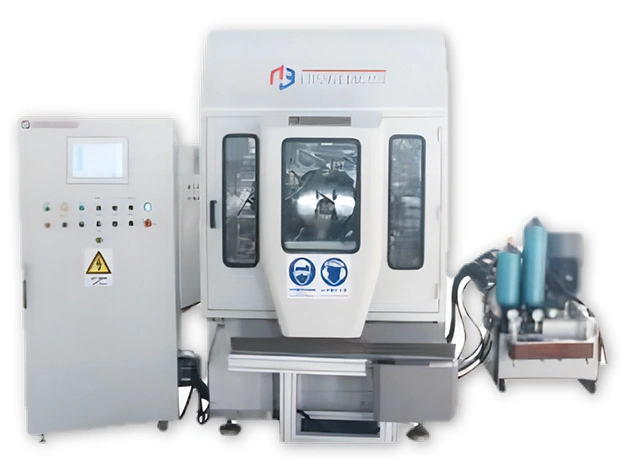
Today’s Hydraulic Multi-Slide Die Casting Machine have a significant impact on modern manufacturing precision, particularly in the production of large, complex metal components with exact tolerances.
The ASM Handbook, Volume 15: Casting and Die Casting Engineering by J.R. Davis, describes a multi-slide die casting system that has a significant increase in the accuracy of dimensional design and a greater utilization of material. These features are significant improvements over conventional die casting systems.
This article comprehensively describes the technical and industrial aspects of the purpose, principles, benefits, and applications of the Hydraulic Multi-Slide Die Casting Machine, utilizing information from leading resources in the industry and authoritative literature on manufacturing to support both professionals in engineering and decision makers in sourcing.
Introduction: Why Hydraulic Multi-Slide Die Casting Matters in Modern Manufacturing
As manufacturing globally shifts towards greater precision, thin walls, and increasingly complex configurations, traditional die casting machines often have a hard time meeting modern production standards. This challenge has prompted the popular adoption of theHydraulic Multi-Slide Die Casting Machine, a specialized machine designed to form metal with multiple directions and superior control over repeatability.
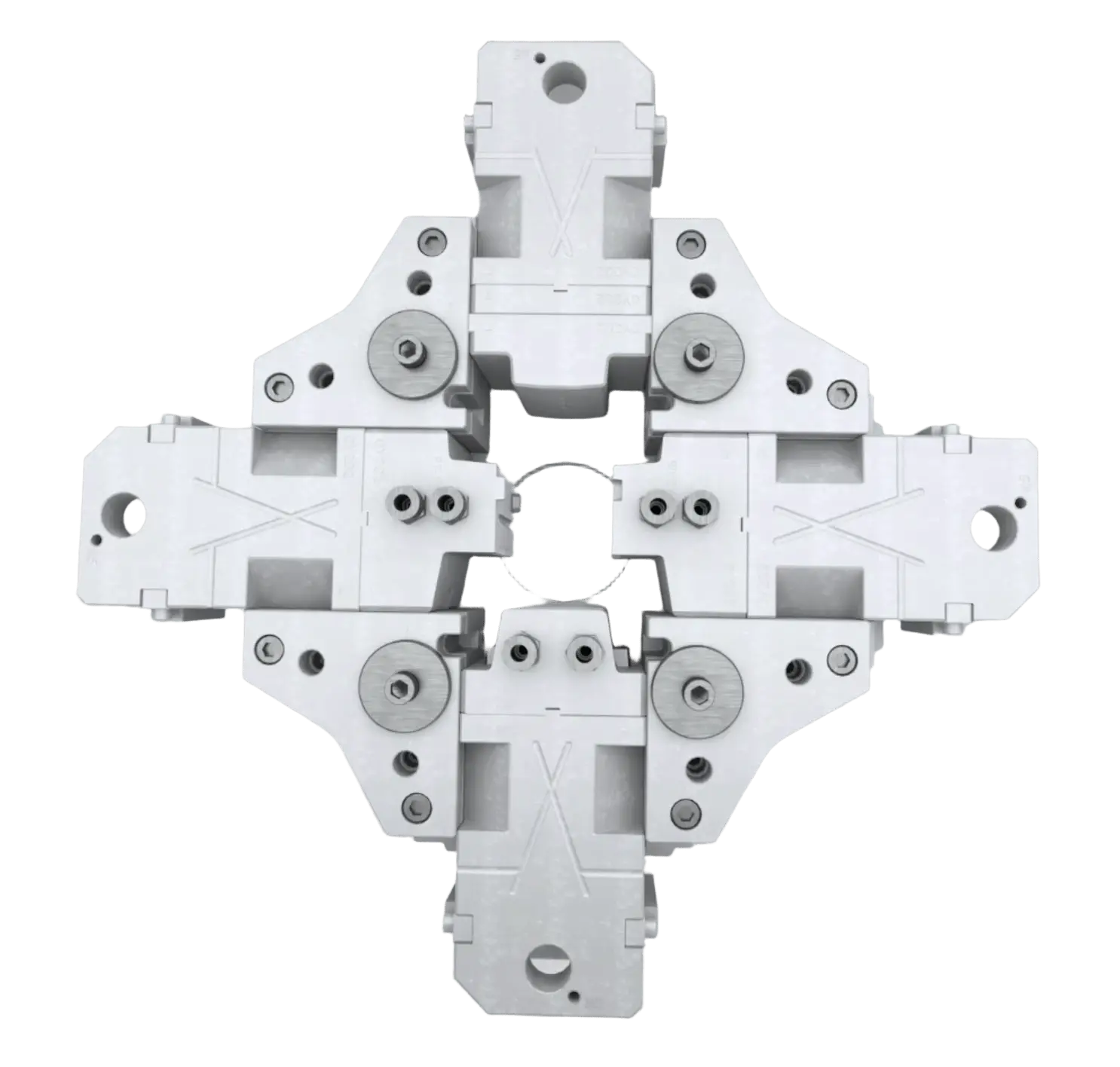
Unlike other cold or hot chamber die casting machines that use multiple hydraulically driven slides that move in different directions, the multi-slide system is unique because it has multiple slides that move simultaneously or sequentially from different directions. This configuration facilitates the production of intricate shapes, undercuts, and integrated features in one manufacturing cycle—this reduces the amount of secondary machining, decreases the volume of wasted material, and improves the overall economics of production.
In fields like automotive, electronics, telecommunication, and industrial hardware, hydraulic multi-slide die casting machines have become a fundamental component of high-volume, high-precision metal production.
What Is a Hydraulic Multi-Slide Die Casting Machine?
A Hydraulic Multi-slide Die Casting machine is a sophisticated machine that employs high-pressure die casting technology in conjunction with multiple independent slides that are controlled by a hydraulic system. These slides function as sections that move towards the die with different vectors, allowing for complex part configurations that are not possible with two or three-plate molds.
The “hydraulic component” is concerned with the actuation methods: hydraulic cylinders have precise force control, smooth motion, and adjustable stroke lengths, which are crucial to maintaining consistency of size and quality in demanding applications of cast iron.
Unlike mechanical multiple-slide systems, hydraulic configurations have increased flexibility, which makes them appropriate for both large-volume parts that are standardized and personalized production runs.

Core Purpose of a Hydraulic Multi-Slide Die Casting Machine
The primary function of a Hydraulic Multislide Die Casting machine is to facilitate efficient, reproducible, and highly accurate production of intricate metal parts that have multiple directions of forming. This overarching goal is composed of several practical goals.
- Allowing complex geometries to be enabled in a single iteration of casting.
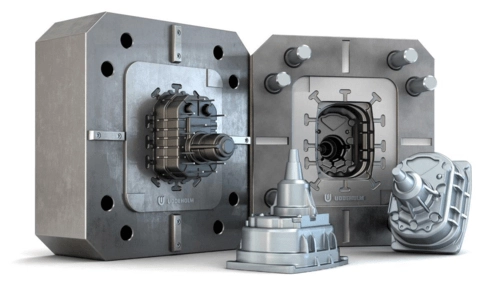
One of the most important purposes of a hydraulic multi-slide die casting machine is its capacity to produce complex geometric components in one operation. Multiple slides can be built with undercuts, side holes, internal passages, and asymmetrical features that don’t require post-processing.
This ability is particularly beneficial in industries that require components to be integrated, such as the automotive transmission case or the electronic connector frame.
- Increasing the accuracy and tolerance of measurement.
Raulic actuation enables precise control of pressure and the synchronization of movement between slides. This results in more stringent tolerances for dimensions and a higher degree of repeatability across production runs, which is essential for high-end industrial components.
According to the ASM Handbook, multi-slide systems have a significant effect on reducing the variation caused by uneven metal flow and misaligned dies; these issues are common in traditional die-casting processes.
- Reducing the Cost of Secondary Machining and Assembly
By creating complex features directly in the die, manufacturers can reduce or eliminate downstream processing operations like drilling, milling, or taping. This decrease in secondary processes directly diminishes the cost of production and reduces lead times.
- Increasing the efficiency of production and utilizing materials.
The efficient metal flowpaths attained by multi-slide tooling decreased the amount of scrap and increased the yield. The control of hydraulics further guarantees that the molten metal is uniformly filling the space, avoiding defects like porosity, cold shutters, or incomplete filling.
How a Hydraulic Multi-Slide Die Casting Machine Works?
Understanding the basic principles of operation is crucial to understanding the entire purpose of this technology.
The procedure starts with the molten metal being introduced into a sealed die under high pressure. Unlike conventional methods, the die has multiple movable slides that are situated around the chamber.
Each slide is driven by a hydraulic system that allows for independent control of the timing, speed, and force. During the casting cycle, the slides travel toward the interior of the cast to create the cavity. They will remain in this position during the injection of metal and the solidification of the cast, and then they will be retracted in a pre-programmed sequence to release the part.
This synchronous movement facilitates the precise formation of features while maintaining structural integrity and a smooth surface.
Key Advantages of Hydraulic Multi-Slide Die Casting Machines
The popularization of hydraulic multi-slide systems is attributed to a combination of technical and economic benefits.
- superior design flexibility
Design engineers have a greater degree of freedom when creating new components. Other features that would ordinarily require multiple components or complex assemblies can be incorporated into a single cast.
- Increased Process Robustness
Hydraulic systems consistently produce a constant force, even when operating under varying conditions. This stability has the result of providing a dependable part quality that will last over extended production periods.
- Scaleability of High-Volume Production
Despite their complexity, hydraulic multi-slide die casting machines are well-suited for mass production. Automated systems guarantee consistency of the cycle and high productivity.
Typical Applications Across Industries
Hydraulic multi-slide die casting machines are commonly utilized in industries that require exactness, strength, and compactness.
In the automotive industry, they are typically employed for components that transmit motion, structural supports, and engine-related housings. The electronics industry relies on multiple slide die casting methods for components that require precise dimensions and thin walls. These components are used in heat sinks, shielding, and communication components.
Other manufacturers of industrial hardware utilize this technology to create locks, fasteners, and mechanical components that have integrated features that reduce the time needed to assemble and increase reliability.
Comparison: Hydraulic Multi-Slide vs Conventional Die Casting Machines
The table below highlights key differences relevant to production decision-making:
| Feature | Hydraulic Multi-Slide Die Casting Machine | Conventional Die Casting Machine |
| Slide Movement | Multiple, hydraulically controlled slides | Limited or no side action |
| Geometry Capability | Highly complex, multi-directional | Relatively simple shapes |
| Tolerance Control | High precision and repeatability | Moderate precision |
| Secondary Machining | Minimal or eliminated | Often required |
| Tooling Complexity | Higher initial complexity | Simpler tooling |
| Production Efficiency | High for complex parts | High for simple parts |
Role in Lean Manufacturing and Cost Optimization
From a manufacturing perspective that is lean, the Hydraulic Multi-Slide Die Casting Machine is utilized to reduce waste and integrate processes. By combining the steps of forming, aping, and creating features into one step, manufacturers can simplify the processes and reduce non-value-added activities.
This concords with the modern strategy of Industry 4.0, which involves automation, precise control, and data-based optimization.
Common Materials Used in Hydraulic Multi-Slide Die Casting
Raulic multiple-slide systems are compatible with a variety of non-ferrous metals. Aluminum alloys are the most popular due to their lightweight attributes and exceptional castability. Zincalloys are beneficial for small, high-detail components, while magnesiumalloys are employed where weight loss is of paramount importance.
The selection of material directly affects the configuration of the machine, the design of the die, and the hydraulic pressure parameters, all of which are specialized in the production of these components.
Maintenance and Operational Considerations
Despite the benefits of the hydraulic multi-slide die casting machine, its purpose is only fully understood through regular maintenance and precise execution. Constant monitoring of the hydraulic system, cylinders, and control valves is crucial to avoiding pressure loss or miscoordination.
Now, advanced control systems can detect deviation in slide travel or the injection parameters, which will help manufacturers to maintain consistent quality.
FAQ: Hydraulic Multi-Slide Die Casting Machine
- What is the primary function of theHydraulic Multiple-Slide Die Casting machine?
The primary objective is to create complex, high-precision components of metal in a single casting operation using multiple hydraulically controlled slides.
- What is the difference between a mechanical and hydraulic multi-slide system?
Hydraulic systems have a smoother motion, a controller that adjusts the force, and a greater degree of flexibility than mechanically driven slides. This makes them ideal for more intricate parts.
- Is a Hydraulic Multiple-Slide Die Casting machine appropriate for large volume production?
Yes. Despite the increased tooling complexity, these machines are still commonly utilized in high-volume manufacturing because of their consistency, speed, and reduced requirement for additional processing.
- What industries are most affected by this technology?
Automotive, electronics, industrial hardware, and precision engineering industries are primarily affected by their demand for intricate, complex metal components.
- Does the practice of multi-slide die casting harm the overall production budget?
While the initial investment may be higher, the decrease in machining, assembly, and waste rates often leads to a lower total cost of production over the product’s lifespan.
Conclusion: Why Hydraulic Multi-Slide Die Casting Machines Are Essential
The Hydraulic Multi-Slide Die Casting machine is not simply an evolution of the traditional die-casting process: it’s also a strategic solution to manufacturing that is intended to address the increasing demand for precision, complexity, and efficiency. Its objective is broader than simply forming metal; it facilitates more efficient design, lessens production costs, and produces more valuable components in global markets that are competitive.
For companies that want to reduce expenses, increase quality, and expand their design capabilities, hydraulic multi-slide die casting technology is a proven and future-oriented investment.