 Skip to content
Abstract
This comprehensive guide explores lightweight aluminum die cast mounting brackets for B2B bulk procurement. Covering material specifications, manufacturing standards, cost structures, and supplier evaluation criteria, this resource equips purchasing managers with technical insights to optimize sourcing decisions for industrial mounting hardware. As global demand for lightweight, high-strength fastening solutions accelerates, understanding the technical nuances of die casting processes, alloy metallurgy, and quality compliance frameworks becomes critical for procurement teams managing multi-million-dollar component portfolios across automotive, aerospace, and industrial sectors.

Understanding Aluminum Die Cast Mounting Brackets
What Are Die Cast Aluminum Mounts
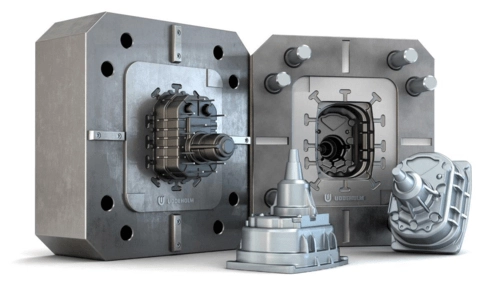
lightweight aluminum die cast mounting brackets represent precision-engineered fastening components manufactured through high-pressure injection molding. The process forces molten aluminum alloy into hardened steel molds at pressures ranging from 10,000 to 20,000 PSI, creating components with dimensional accuracy within ±0.1mm tolerances. This manufacturing method delivers a superior surface finish compared to sand casting or permanent mold techniques, reducing secondary machining requirements by up to 70%.
Material composition centers on three primary aluminum alloy families. A380 alloy (8.5% silicon, 3.5% copper) dominates North American markets due to excellent fluidity and die-filling characteristics, achieving tensile strengths of 320 MPa. ADC12 (Japanese standard, 11% silicon) offers enhanced corrosion resistance for marine and outdoor applications. AlSi9Cu3 (European EN AC-46000) provides optimal thermal conductivity for heat-dissipating mounting applications in electronics enclosures.
The fundamental structural advantage lies in the strength-to-weight ratio. lightweight aluminum die cast mounting brackets achieve 70% weight reduction versus equivalent steel brackets while maintaining comparable load-bearing capacity. A typical 150mm x 100mm mounting bracket weighs 180 grams in A380 aluminum versus 620 grams in cold-rolled steel, yet supports identical 250kg shear loads when properly designed with ribbing patterns and gusset reinforcements.
Core Applications Across Industries
Automotive assembly systems consume 38% of global lightweight aluminum die cast mounting brackets production. Engine bay mounting hardware, transmission support brackets, and battery tray fixtures leverage aluminum’s thermal stability (-40°C to +150°C operating range) and vibration-damping properties. Tier-1 suppliers specify die cast aluminum for electric vehicle battery pack mounting frames, where weight savings directly translate to extended driving range.
HVAC installations utilize lightweight aluminum die cast mounting brackets for outdoor condenser unit mounting, ductwork support systems, and rooftop equipment anchoring. The natural corrosion resistance of anodized aluminum eliminates the rust-jacking failures common in galvanized steel brackets exposed to condensation cycles. Electrical enclosures in industrial control panels employ die cast mounting rails that provide EMI shielding while supporting 50kg+ component loads.
Aerospace fixtures demand AS9100-certified lightweight aluminum die cast mounting brackets for avionics rack mounting, interior panel attachments, and non-structural airframe brackets. The 2.7 g/cm³ density of aluminum versus 7.85 g/cm³ for steel translates to 15-25kg weight savings per commercial aircraft. Telecommunications infrastructure increasingly specifies die cast aluminum for 5G antenna mounting hardware, where precision hole patterns enable rapid field installation while resisting coastal salt-spray corrosion.
Technical Specifications for Bulk Procurement
Material Grade Selection Criteria
Alloy selection fundamentally impacts the total cost of ownership for lightweight aluminum die cast mounting brackets. A380 aluminum provides the lowest unit cost ($2.80-$3.20/kg) with 315-325 MPa tensile strength, suitable for general industrial mounting where moderate corrosion resistance suffices. The 8-9% silicon content ensures excellent die-filling for complex geometries with a wall thickness down to 1.5mm.
ADC12 alloy commands a 15-20% price premium but delivers superior marine-grade corrosion resistance through higher silicon content (9.6-12%). Salt-spray testing per ASTM B117 shows ADC12 withstands 1,000+ hours before visible pitting versus 600 hours for A380. Specify ADC12 for coastal installations, chemical processing plants, or food-grade equipment mounting.
AlSi9Cu3 serves high-thermal-load applications requiring 160-180 W/m·K thermal conductivity—double that of A380. LED lighting fixture mounts, power electronics brackets, and heat-exchanger mounting frames benefit from this alloy’s heat-dissipation properties, though material costs increase 25-30% versus A380.
Surface finish selection determines environmental durability for lightweight aluminum die cast mounting brackets. Powder coating (60-120μm thickness) provides Class 1 outdoor protection with 10-year warranty cycles, adding $0.40-$0.80 per bracket. Type II anodizing (10-25μm) offers superior abrasion resistance for high-vibration applications at $0.25-$0.50/unit premium. Chromate conversion coating (per MIL-DTL-5541) delivers cost-effective corrosion inhibition for indoor applications at $0.10-$0.15/unit.
Dimensional Tolerances and Quality Standards
ISO 8062 defines tolerance grades for die castings, with CT4-CT5 grades standard for lightweight aluminum die cast mounting brackets. CT4 specifies ±0.26mm tolerance for 100mm nominal dimensions, adequate for bolt-pattern alignment in structural applications. High-precision aerospace brackets require CT6-CT7 grades (±0.15mm), achievable through secondary CNC machining operations that add 20-35% to unit costs.
ASTM B85 compliance mandates minimum mechanical properties: 240 MPa ultimate tensile strength, 160 MPa yield strength, and 2.5% elongation for A380 alloy. Procurement specifications should reference ASTM B85 Table 1 to verify supplier test certificates match declared alloy grades.
Load-bearing capacity calculations follow empirical formulas: Shear strength = 0.6 × Ultimate Tensile Strength × Cross-sectional Area. For a 10mm diameter mounting hole in a 4mm wall thickness A380 bracket: Shear capacity = 0.6 × 320 MPa × (π × 10mm × 4mm) = 24,127 N (2,461 kg-force). Safety factors of 3:1 to 5:1 apply depending on dynamic loading conditions.
| Alloy Grade | Tensile Strength (MPa) | Corrosion Rating (ASTM B117 hrs) | Typical Applications | Cost Index (A380=1.0) |
|---|---|---|---|---|
| A380 | 320 | 600 | General industrial, automotive | 1.00 |
| ADC12 | 295 | 1,000+ | Marine, outdoor HVAC | 1.18 |
| AlSi9Cu3 | 280 | 750 | Electronics, thermal management | 1.28 |
| A413 | 290 | 500 | Thin-wall complex geometries | 1.05 |
Wholesale Procurement Strategy
Volume Pricing Structures
Minimum order quantities (MOQ) for standard catalog lightweight aluminum die cast mounting brackets range from 500-1,000 units, while custom tooled designs require 3,000-5,000 unit commitments to amortize $8,000-$25,000 die costs. Tiered pricing follows predictable curves: 500-unit orders at $4.50/unit, 2,000 units at $3.20/unit, 10,000+ units at $2.40/unit for medium-complexity A380 brackets (150g weight, two mounting holes).
Tooling cost allocation varies by complexity. Simple two-cavity dies for basic L-brackets cost $12,000-$18,000 with 100,000-cycle life expectancy. Multi-cavity dies (4-8 cavities) for high-volume production of lightweight aluminum die cast mounting brackets reach $45,000-$80,000 but reduce per-unit cycle time by 60%, lowering piece prices 25-30% at volumes exceeding 50,000 units annually.
Negotiate tooling ownership clauses explicitly. “Supplier-owned tooling” models spread die costs across initial production runs but restrict source flexibility. “Buyer-owned tooling” requires upfront capital ($15,000-$30,000) but enables competitive re-sourcing, reducing long-term costs 18-22% based on industry benchmarks.
Supplier Qualification Checklist
ISO 9001:2015 certification verifies basic quality management systems but lacks manufacturing-specific rigor. IATF 16949 certification (automotive) mandates statistical process control, PPAP documentation, and FMEA analysis—critical for safety-critical mounting applications. AS9100D (aerospace) requires full material traceability and non-destructive testing capabilities for lightweight aluminum die cast mounting brackets.
Production capacity verification demands factory audits examining:
-
Die casting machine tonnage (400-1,250 ton capacity for bracket production)
-
Daily output rates (8,000-15,000 shots per machine)
-
Secondary operations capability (CNC drilling, tapping, deburring)
-
Quality lab equipment (CMM machines, spectrometers, tensile testers)
Lead time analysis should account for:
-
Tooling fabrication: 8-12 weeks for new dies
-
First article inspection: 2-3 weeks
-
Production runs: 3-6 weeks for 5,000-10,000 units
-
Surface finishing: 1-2 weeks (powder coating adds the longest delays)
-
International shipping: 4-6 weeks sea freight, 5-7 days air freight
Quality Assurance and Compliance
Inspection Protocols for Bulk Orders
Pre-shipment inspection (PSI) protocols per ANSI/ASQC Z1.4 (AQL sampling) establish statistically valid quality verification. For 5,000-unit orders of lightweight aluminum die cast mounting brackets, Level II inspection requires 200-sample verification (4% sampling rate) with 0.65% acceptable defect threshold for critical dimensions.
Dimensional verification employs coordinate measuring machines (CMM), checking:
-
Hole-to-hole centerline distances (±0.2mm tolerance)
-
Mounting surface flatness (≤0.3mm deviation per 100mm)
-
Thread pitch accuracy for tapped holes (6H tolerance class)
Porosity testing uses radiographic inspection (per ASTM E155) on 2% of production lots, rejecting castings with gas porosity exceeding 3% volume fraction in load-bearing sections. Ultrasonic testing identifies subsurface voids in critical stress areas without destructive sectioning.
Surface defect analysis categorizes imperfections:
-
Class A: Cosmetic (minor flash, <0.5mm) – acceptable
-
Class B: Functional (sharp edges, >1mm parting line steps) – requires deburring
-
Class C: Structural (cracks, cold shuts, >2mm porosity) – rejection
Regulatory Compliance Requirements
RoHS Directive 2011/65/EU restricts lead content to <0.1% by weight. While aluminum alloys naturally comply, verify supplier declarations cover secondary processes like chromate conversion coatings, which historically used hexavalent chromium. Trivalent chromium alternatives (per MIL-DTL-5541 Type II) ensure RoHS compliance for lightweight aluminum die cast mounting brackets.
REACH regulation (EC 1907/2006) mandates disclosure of 224 Substances of Very High Concern (SVHCs). Request supplier REACH declarations confirming <0.1% concentration of listed substances, particularly for surface treatments and lubricants used in die release.
Industry-specific certifications include:
-
UL recognition for electrical enclosure mounting (UL 50/50E standards)
-
CE marking for machinery directive compliance (2006/42/EC)
-
FDA 21 CFR 175.300 for food-contact equipment mounting
-
DNV-GL certification for marine/offshore platform hardware
Cost Optimization and Logistics
Total Cost of Ownership Analysis
Unit price represents only 45-60% of the total acquisition cost for lightweight aluminum die cast mounting brackets. Comprehensive TCO modeling includes:
Tooling amortization: $20,000 die cost ÷ 50,000 unit life = $0.40/unit. Extending tool life through preventive maintenance (shot blasting, nitride re-coating every 15,000 cycles) reduces amortization by 15-20%.
Quality costs: Incoming inspection ($0.15/unit), rework/scrap (2-3% rejection rate = $0.12/unit), warranty claims (0.5% failure rate × $8 replacement cost = $0.04/unit).
Logistics expenses: Sea freight consolidation achieves $0.18-$0.25/kg for Asia-to-North America routes (35-day transit). Air freight ($4.50-$6.00/kg) is justified only for production line stoppages where downtime costs exceed $5,000/hour.
Inventory carrying costs: 18-25% annual holding cost (warehouse space, insurance, obsolescence risk) incentivize just-in-time delivery. However, 8-12 week supply chain volatility requires 4-6 week safety stock for critical mounting components.
Inventory Management Best Practices
Vendor-managed inventory (VMI) arrangements transfer stock ownership of lightweight aluminum die cast mounting brackets to suppliers until point-of-use, eliminating 22-30% of carrying costs. Suppliers maintain 2-3 week consignment stock at buyer facilities, replenishing based on real-time ERP integration.
Kanban systems for high-volume mounting hardware (>500 units/week consumption) reduce safety stock by 35-40%. Two-bin visual management triggers reorder at predetermined levels, smoothing demand variability.
Safety stock calculations employ the formula: SS = Z × σ × √LT, where Z = service level factor (1.65 for 95% availability), σ = demand standard deviation, and LT = lead time in weeks. For brackets with 200-unit weekly demand (σ=40) and 8-week lead time: SS = 1.65 × 40 × √8 = 186 units.
FAQ
1. What is the typical lead time for 5,000-unit orders of custom lightweight aluminum die cast mounting brackets?
Total lead time for lightweight aluminum die cast mounting brackets spans 14-18 weeks from PO issuance to delivery. Tooling fabrication consumes 8-10 weeks (die design, CNC machining, heat treatment, trial shots). First article inspection and approval adds 2 weeks. Production runs require 3-4 weeks for 5,000 units (assuming 4-cavity tooling at 45-second cycle times). Surface finishing (powder coating, anodizing) extends timelines by 1-2 weeks. International shipping via sea freight adds 4-6 weeks. Expedited programs using existing similar tooling can compress timelines to 6-8 weeks at a 25-35% cost premium.
2. How do aluminum die castings compare to steel stampings for mounting applications in corrosive environments?
lightweight aluminum die cast mounting brackets demonstrate superior long-term performance in corrosive environments through inherent passivation. Aluminum forms protective aluminum oxide layers (Al₂O₃) within hours of atmospheric exposure, self-healing when scratched. Anodized aluminum withstands 1,000+ hours of salt-spray testing versus 200-400 hours for zinc-plated steel stampings. However, galvanic corrosion occurs when aluminum contacts dissimilar metals—specify stainless steel fasteners or nylon isolators. Initial costs run 40-60% higher than steel stampings, but a 15-20 year service life versus 5-8 years for coated steel yields 22-28% lifecycle cost savings in marine, chemical, or outdoor applications.
3. What are the hidden costs in wholesale aluminum die casting procurement?
Beyond quoted unit prices for lightweight aluminum die cast mounting brackets, hidden costs include: (1) Tooling modifications—design changes post-production require $2,000-$8,000 die rework, (2) Secondary operations—drilling, tapping, inserts add $0.30-$1.20/unit not always quoted upfront, (3) Packaging—custom foam inserts, export crating add $0.15-$0.40/unit, (4) Quality escapes—field failures cost 15-25× the original part price in warranty labor, (5) Currency fluctuations—aluminum pricing volatility (±12% annually) without hedging contracts, (6) Minimum reorder quantities—tooling storage fees ($200-$500/year) for low-volume repeat orders. Request itemized quotations separating material, tooling amortization, processing, finishing, and logistics to enable accurate TCO comparison across suppliers.
Conclusion
Strategic sourcing of lightweight aluminum die cast mounting brackets requires balancing technical specifications, quality assurance, and cost structures. By understanding alloy selection—prioritizing A380 for cost-sensitive applications, ADC12 for corrosive environments, and AlSi9Cu3 for thermal management—procurement teams optimize material performance against budget constraints. Compliance requirements spanning ISO 8062 tolerances, ASTM B85 mechanical properties, and RoHS/REACH environmental standards demand rigorous supplier qualification beyond basic ISO 9001 certification.
Effective wholesale procurement leverages volume pricing structures for lightweight aluminum die cast mounting brackets while accounting for tooling amortization, secondary operations, and total logistics costs. The 45-60% unit price component of TCO necessitates holistic analysis, including quality costs, inventory carrying expenses, and supply chain risk mitigation. Vendor-managed inventory arrangements and statistical safety stock calculations reduce working capital requirements 25-35% while maintaining production continuity.
As industries prioritize lightweighting, corrosion resistance, and precision fastening solutions, lightweight aluminum die cast mounting brackets deliver measurable performance advantages over steel alternatives. Procurement professionals armed with metallurgical knowledge, tolerance specification expertise, and supplier capability assessment frameworks secure reliable, cost-effective mounting solutions that meet industrial performance standards while optimizing total acquisition costs across multi-year supply agreements.