 Skip to content
Introduction
For manufacturers producing small, complex metal components, tooling costs can have a major impact on profitability. A hydraulic multi-slide die casting machine offers a different approach by forming complex features in a single shot, reducing tooling complexity and minimizing secondary machining. Compared with conventional die casting systems, multi-slide technology can lower initial tooling investment, extend tool life, and improve production efficiency.
This article explores how these advantages translate into measurable cost savings and a lower total cost of ownership for high-volume precision component manufacturing.
What Is a Hydraulic Multi Slide Die Casting Machine? (And Why It’s Different)
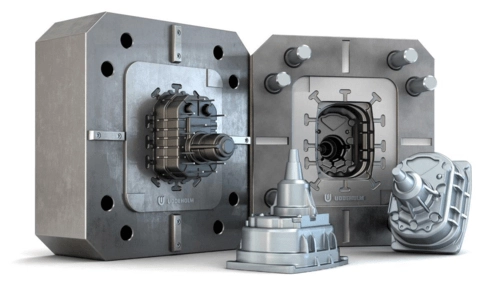
Before diving into cost savings, here’s a quick primer. A conventional die casting machine uses a two-part tool that opens in a single direction. This works for simple geometries, but when you need undercuts, side holes, cross holes, or complex internal features, you’re forced to add expensive mechanical slides, lifters, or—worst case—secondary machining operations.
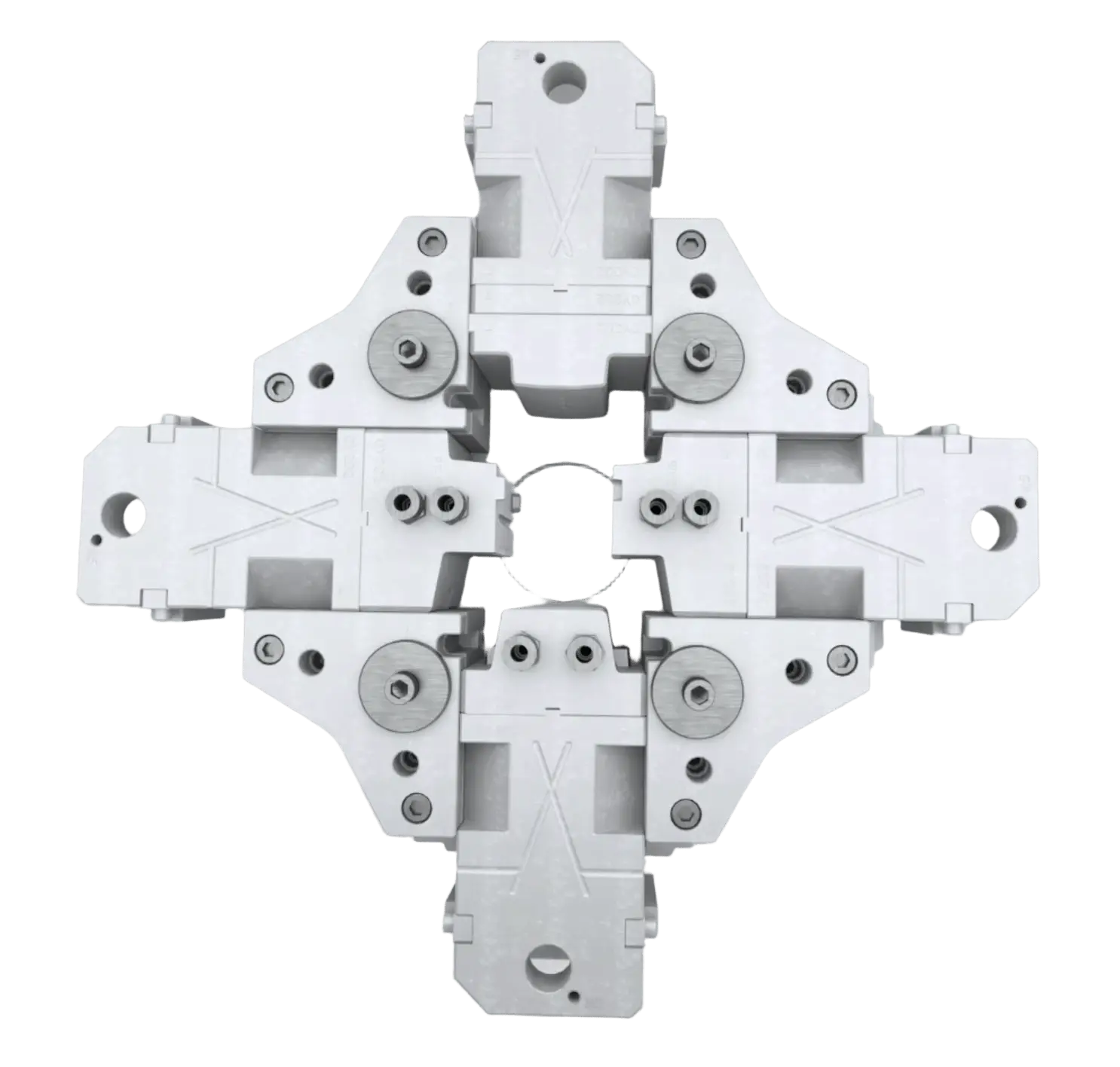
A hydraulic multi slide die casting machine flips that model on its head. Instead of two die halves, it uses two to six perpendicular slides, each carrying its own die block and moving independently. The result? You can form features from multiple directions simultaneously, in a single shot, dramatically reducing tooling complexity.
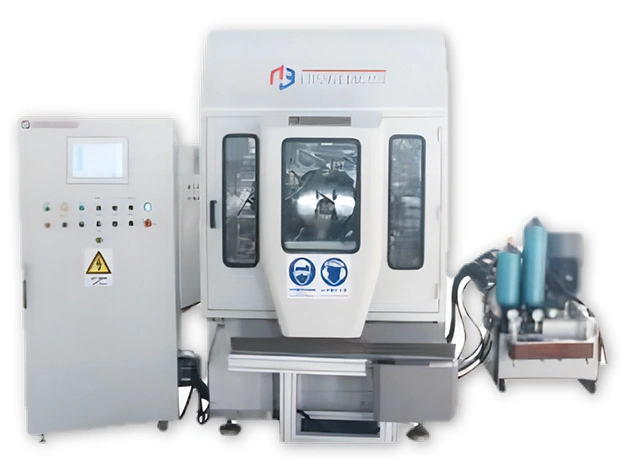
Take the hydraulic multi slide die casting machine developed by Nantong Changyin Cast Co., Ltd. (CYD). It’s an independently developed, nationally patented machine designed specifically for high-volume, high-precision zinc alloy component production. Using patented multi-slide synergy technology, this machine achieves integrated near-net-shape forming of complex structures—meaning parts come out of the tool with:
- Exceptional flash-free surface quality
- Minimal post-processing required
- ±0.01mm dimensional precision
- 5-second cycle times
- Tool life rated for 1.5 million cycles
For context:
- Standard aluminum die casting molds last 50,000–100,000 shots
- Zinc tooling typically reaches 100,000–150,000 shots
That’s a 10x to 30x increase in productive life per tool—something only a hydraulic multi slide die casting machine can consistently deliver.
But beyond these specs, the real question is: how does this translate into lower tooling costs and higher ROI?

How Multi-Slide Design Slashes Tooling Costs from Day One
Fewer Components, Lower Initial Investment
This is where the cost advantage starts to become clear. A conventional tool for a small, complex part may require multiple side actions, each machined from high-grade tool steel and fitted with precision-guided mechanisms. These components add significant expense—not only in material costs, but also in the skilled labor required for machining, assembly, and maintenance.
With a multi-slide approach, the complexity is distributed across multiple smaller die blocks rather than concentrated in a single monolithic tool with protruding slides. Each slide is simpler, smaller, and easier to manufacture, helping reduce both tooling complexity and production costs.
According to industry benchmarking, tools designed for a hydraulic multi slide die casting machine can cost less than half as much as conventional tooling for the same component.
Consider a few typical tooling ranges:
- Simple single-cavity zinc molds: $1,500–$8,000
- Mid-complexity aluminum production tools: $6,000–$35,000
- Multi-cavity tools with extensive side actions: $40,000–$80,000+
By comparison, a multi-slide tool for a similar zinc component often falls within the $15,000–$30,000 range while offering greater geometric flexibility and fewer manufacturing constraints.
This is more than a modest cost reduction. It represents a fundamentally different approach to tooling design—one made possible by the hydraulic multi slide die casting machine architecture.
Near-Net-Shape Forming Reduces Secondary Operations
Another major cost factor is post-processing. Operations such as machining, drilling, deburring, and trimming add more than direct labor and equipment expenses. They also increase lead times, introduce dimensional variation, and create additional opportunities for scrap and rework.
A hydraulic multi slide die casting machine minimizes these requirements by forming features from multiple directions simultaneously. Cross holes, undercuts, threads, and complex contours that would normally require secondary machining can often be cast directly into the component.
Combined with an optimized runner system and multi-slide synergy technology, the process produces exceptionally clean castings. In many cases, only minimal finishing is required to achieve high-quality, flash-free surfaces.
The financial impact can be substantial. Industry estimates suggest that eliminating secondary machining operations can reduce total part costs by 20% to 30% for precision components. Additional savings often come from lower scrap rates, reduced rework, and less inspection time throughout production.
The Longevity Factor—1.5 Million Shots Changes Your Cost-Per-Part Math
Tooling cost isn’t just about what you pay upfront. It’s about how many good parts you get before the tool wears out and needs replacement or major refurbishment. This is where hydraulic multi slide die casting machines deliver their most dramatic advantage. Because the machine operates at zinc’s lower melting temperature (≈420°C) and spreads stress across multiple slides, tool steel lasts far longer than in any conventional system.
Comparing Tool Life Across Technologies
Let’s look at real-world data. A conventional aluminum die casting mold typically lasts 50,000 to 100,000 shots. Zinc tooling—because zinc’s lower melting temperature (about 420°C vs. 660°C for aluminum) reduces thermal stress on the die—can reach 100,000 to 150,000 shots under good conditions. Magnesium tooling stretches further, around 200,000 to 300,000 shots.
Now consider what a well-designed hydraulic multi slide die casting machine can achieve. The CYD machine is rated for 1.5 million cycles before significant wear requires intervention. That’s not a theoretical maximum under ideal lab conditions. It’s a production-rated spec backed by actual deployment in locks, hardware, micro-gears, electronic enclosures, medical devices, and smart home assemblies.
To put that in perspective:
| Technology Type | Typical Tool Life (Shots) | Cost Per 1,000 Shots (Tooling Amortization) |
|---|---|---|
| Conventional Aluminum HPDC | 50,000–100,000 | High |
| Conventional Zinc Die Casting | 100,000–150,000 | Medium-High |
| Hydraulic Multi-Slide Zinc (using a hydraulic multi slide die casting machine) | 1,500,000+ | Very Low |
Based on a $25,000 tool investment for a complex part:
-
Conventional (100K shots) → $250 per 1,000 shots
-
*Multi-slide (1.5M shots) → $16.70 per 1,000 shots*
That’s a 93% reduction in tooling amortization per thousand parts. No other machine type comes close to this efficiency without the multi-slide architecture.
Why Multi-Slide Tools Last Longer
You might be wondering: what’s the secret? Two factors.
First, the operating temperature. Multi-slide machines are predominantly used for zinc alloys, which melt at roughly 420°C. Aluminum, by contrast, melts at about 660°C, nearly 250°C higher. That difference is massive for tool steel. Every thermal cycle expands and contracts the die material; higher temperatures accelerate thermal fatigue, cracking, and “heat checking.” About 70% of die casting tool failures are caused by thermal fatigue cracks. Lower operating temperature means slower crack propagation and longer tool life.
Second, slide distribution. By spreading the forming load across multiple smaller die blocks rather than concentrating it in a single large tool, localized thermal and mechanical stress is reduced. Each slide experiences less severe cycling, which adds up to dramatically longer overall life. That’s exactly why a hydraulic multi slide die casting machine can outlast conventional equipment by a factor of ten or more.
Beyond Tooling—The Hidden Cost Savings
A hydraulic multi slide die casting machine doesn’t just save you money on the tool itself. It restructures your entire production cost model.
Near-Zero Material Waste
Traditional die casting setups produce significant scrap—runners, overflows, and flash that must be trimmed and either recycled (which costs energy and handling) or discarded. The optimized runner system in a multi-slide machine minimizes runner length and eliminates most flash, producing parts that are true near-net-shape.
Material waste isn’t a line item most manufacturers track carefully, but it should be. For zinc alloys, which typically cost $2.50 to $4.00 per pound depending on alloy and market conditions, reducing scrap by even 10% on a high-volume production run translates to thousands of dollars in annual savings.
Five-Second Cycles Boost Throughput Without Extra Tooling Cost
Let’s talk about cycle time. The CYD hydraulic multi-slide machine runs a 5-second cycle. Conventional hot-chamber zinc machines typically run 10 to 20 seconds for comparable part complexity. That’s 2x to 4x faster.
Why does this matter for tooling costs? Because tooling cost is ultimately amortized over the number of parts produced per unit of time. A faster machine produces more parts per shift, per day, per year—spreading the fixed tooling investment across a much larger output volume. You’re not just saving on the tool’s purchase price; you’re generating more revenue with the same tool.
Precision That Reduces Scrap and Inspection
At ±0.01mm precision, a hydraulic multi slide die casting machine holds tolerances that conventional machines struggle to match. Tighter tolerances mean fewer parts rejected for dimensional non-conformance. Fewer rejects mean less wasted material, less rework, and lower inspection costs.
For industries like medical devices, micro-gears, and high-end electronics enclosures—where CYD’s machines are already deployed—that precision isn’t just a nice-to-have. It’s the difference between a profitable production run and a costly recall.
Cost Comparison Table—Multi-Slide vs. Conventional
To make this concrete, here’s a side-by-side comparison for a hypothetical zinc alloy component produced at 500,000 parts per year over three years.
| Cost Factor | Conventional Die Casting | Hydraulic Multi-Slide |
|---|---|---|
| Initial Tooling Cost | $35,000–$60,000 | $20,000–$35,000 |
| Tool Life | 100,000–150,000 shots | 1,500,000+ shots |
| Tool Replacements Needed (3 yrs) | 3–5 tools | 1 tool |
| Total Tooling Spend (3 yrs) | $105,000–$300,000 | $20,000–$35,000 |
| Secondary Operations | Drilling, trimming, and deburring | Minimal or none |
| Cycle Time | 12–18 seconds | 5 seconds |
| Annual Output Per Machine | ~1.0–1.5M parts | ~3.5–4.0M parts |
| Material Waste | 15–25% scrap rate | <5% scrap rate |
Figures are representative of zinc alloy small-component production. Your actual results will vary based on part geometry, production volume, and operating conditions.
The headline here isn’t subtle: over a multi-year production run, the total tooling and operational cost of the multi-slide approach can be one-fifth to one-tenth that of conventional technology, while simultaneously delivering higher output and better quality.
Real-World Applications—Where Multi-Slide Delivers the Biggest ROI
Not every part is a good fit for multi-slide technology. But for components that check certain boxes, the ROI is compelling.
The Sweet Spot for Hydraulic Multi Slide Die Casting Machines
Multi-slide technology excels when your part:
-
Weighs less than 400 grams. Industry consensus puts the practical threshold around 400g. Below that, multi-slide is almost always the more cost-effective and precise option.
-
Has complex geometry. Side holes, cross holes, undercuts, threads, or multi-directional features that would require slides or secondary machining in a conventional tool.
-
Is produced in high volumes. The tooling savings multiply with volume. At 100,000 parts per year, the difference is noticeable. At 1 million+ per year, it’s transformative.
-
Requires tight tolerances and excellent surface finish. Near-net-shape casting with minimal flash means less post-processing and better as-cast surfaces.
Industries Already Benefiting
CYD’s hydraulic multi slide die casting machines are already deployed across several demanding sectors: locks and hardware (the traditional stronghold), micro-gears for precision mechanisms, high-end electronic enclosures, medical device components where precision and surface quality are critical, and smart home assemblies.
In each case, manufacturers report not just lower tooling costs but faster time-to-market, reduced secondary processing, and more predictable production schedules.
Making the Switch—Practical Steps to Lower Your Tooling Costs
If the data is convincing, what does a transition to hydraulic multi-slide technology actually look like?
Step 1: Part evaluation. Not every component is right for multi-slide. Start by reviewing your current production portfolio. Identify parts under 400 grams with complex geometry that currently require significant secondary operations.
Step 2: Get a tooling quote. Request a multi-slide tooling quote for one of those parts alongside a conventional quote. You’ll likely see a significant difference—often 40% to 50% lower for the multi-slide approach. Don’t forget to specify that the quote is for a hydraulic multi slide die casting machine tool set.
Step 3: Run the total cost of ownership (TCO) model. Include tooling amortization over expected tool life, secondary operation costs, cycle time differences, material waste, and scrap rates. Conventional wisdom often stops at initial tooling cost. The real savings come from the multi-year picture.
Step 4: Pilot a single part. Before committing to a machine purchase, consider running a pilot production batch using a supplier with multi-slide capability. Validate the quality, cycle times, and tool life projections with real production data.
Conclusion: The Bottom Line on Tooling Costs
Can a hydraulic multi slide die casting machine reduce tooling costs? The answer is clear, substantially.
By combining simpler tool construction, longer tool life (1.5M+ shots vs. 100K–150K for conventional zinc tooling), near-net-shape casting that removes secondary operations, and 5-second cycle times that spread fixed costs over more parts, cost-per-part reductions are often measured in multiples.
For manufacturers in locks, electronics, medical devices, and smart home products, the hydraulic multi slide die casting machine is not just an upgrade—it is a different economic model for tooling.
Stop paying for short-life tooling. Stop relying on secondary machining. Start producing higher-quality parts with lower cost per part.
Contact us for a tooling quote. Engineers will evaluate your part and provide a total-cost comparison.