 Skip to content
Abstract:
The gear housing is a crucial mechanical component that is intended to enclose, support, shield, and align the gear transmission systems in a variety of mechanical and industrial applications.
Shigley’s Mechanical Engineering Design and Machinery’s Handbook have authoritative references that describe the importance of gear housings in the distribution of loads, lubrication, control of vibrations, and long-term reliability of gear-driven systems.
Beyond simply serving as a simple shell that protects things, gear’s housing has a direct impact on the efficiency of the gear, the life of the gear, its thermal behavior, and the safety of the operation.
This article provides a comprehensive description of what gear housing is, how it functions, and why it’s essential in modern machinery, as well as a discussion of the different design options that exist in the industry.
Introduction: Why Gear Housing Matters More Than Most People Think?
In mechanical power transmission systems, gears are often considered to be the primary functional components, which transfer torque, reduce speed, and control motion. However, the gear system is not isolated from the rest of the world. Their capabilities, reliability, and service life are primarily derived from the structure that surrounds them: the gear housing.
The housing for Gear is frequently disregarded, considered purely protective, or as a secondary component. In practice, it is a structural element that controls the accuracy of alignment, the distribution of loads, the efficiency of lubrication, the heat that is dissipated, the control of noise, and environmental protection. In high-intensity or precision-driven systems, a poorly conceived gear housing can adversely affect the highest quality gear set.
From mechanical gearboxes and automotive transmissions to windmills and heavy equipment used in construction, the housing of the gear is important in determining whether or not the system will consistently perform over time or will fail early on.
What Is Gear Housing?
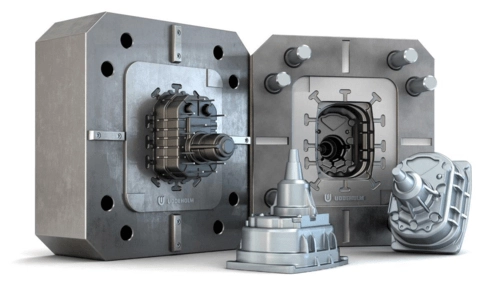
Gear housing is a solid container that contains one or more gears, shafts, bearings, seals, and lubrication components. These components serve as a complete transmission of power. Its primary function is to provide a consistent mechanical environment that allows gears to correctly mesh and function efficiently in the presence of a designed load.
Unlike standard enclosures, gear housings are pre-designed components that have exacting tolerances in dimensions, structural requirements, and material composition. They’re intended to withstand mechanical pressure, thermal expansion, vibrations, and environmental exposure while maintaining the exact alignment of the components that rotate.
In most instances, the gear housing also functions as the interface between the gearbox and the surrounding machine components; it is therefore a load-bearing component instead of a passive shell.

Core Functions of Gear Housing
The purpose of the gear housing is to extend past the confines. It functions in several connected roles that directly affect the performance and durability of the system.
- Structural Support and Control over Alignment
One of the most important functions of gear housing is ensuring that the teeth of the gear and the shafts are accuratelyaligned. The process of gear meshing is dependent on accurate center locations and precise angles. Even small misalignments can lead to uneven distribution of load across the teeth of a gear, which will lead to accelerated wear and increased noise.
Gear housing provides a solid framework that supports bearings and shafts in pre-established positions. When loaded, the housing must have enough strength to support the weight and prevent misalignment. This is of special significance in high-powered systems like industrial reducers, mining machines, and wind turbine gearboxes.
- Load distribution and stress management
Gear housings redistribute and absorb the forces that occur during the operation of different gear types. These forces include the radial pressure, the axial force, and the dynamic pressure caused by the gearing of the mechanism and the fluctuating load.
By transferring these powers safely to the machine’s frame or base, the housing will shield internal components from too much stress. A proper design of the gear housing reduces the stress concentrations, which decreases the likelihood of fatigue cracks and structural failure.
- lubrication, containment, and management
Adequate lubrication is crucial to reducing friction, controlling the temperature, and preventing surface damage in gearing and bearings. The Gear housing is considered a sealed reservoir that stores lubricants like oil or grease in the system.
Beyond containment, the design of housing affects the flow path of lubricant, the pattern of splashing, and the dissipation of heat. Features like oil reservoirs, channels, and inspection ports are incorporated into the housing to ensure constant lubrication in response to varying conditions of operation.
- Environmental Protection
Gear systems are frequently exposed to harsh environments that include dust, moisture, chemicals, and extreme temperatures. Gear housing provides a shield that isolates internal components from external hazards.
Seals, gaskets, and breather systems are incorporated into the housing to prevent the ingress of dirt while accommodating pressure changes caused by thermal expansion.
- Sound and Vibration Reduction
The process of gearing causes inherently loud and vibrant noise and vibrations. The gear housing has a significant role in mitigating these effects. The volume, density, and shape of the mass influence the way vibrations are transmitted or absorbed.
In applications that are sensitive to noise, such as elevators, robots, and machines that are precision-built, the design of the housing is optimized to reduce the acoustic emission and improve the comfort of the operator.
Types of Gear Housing by Design Configuration
Gear housings vary widely depending on application, load requirements, and manufacturing constraints. The most common configurations include split housings, single-piece housings, and modular designs.
| Housing Type | Characteristics | Typical Applications |
| Split housing | Two-piece design for easy assembly and maintenance | Industrial gearboxes |
| Single-piece housing | High rigidity, limited access | Automotive transmissions |
| Modular housing | Interchangeable sections | Customized machinery |
Split housings are particularly common in heavy industrial applications where maintenance accessibility is critical. Single-piece housings offer superior stiffness and are preferred in compact or high-speed systems.
Gear Housing Materials and Their Functional Impact
Material selection has a profound influence on gear housing performance. Common materials include cast iron, steel, aluminum alloys, and increasingly, composite materials.
| Material | Key Advantages | Limitations |
| Cast iron | Excellent damping, high strength | Heavy, brittle |
| Steel | High toughness, load capacity | Cost, machining complexity |
| Aluminum alloy | Lightweight, good heat dissipation | Lower stiffness |
| Composites | Corrosion resistance, low weight | Cost, limited load capacity |
Cast iron remains the dominant material for industrial gear housings due to its vibration-damping properties and cost-effectiveness. Aluminum housings are favored in automotive and aerospace applications where weight reduction is critical.
Role of Gear Housing in Gearbox Performance
The housing for the gear is intrinsically linked to the overall performance of the gearbox. The stiffness of the object determines the degree to which the gears align under pressure. The thermal properties of the substance influence the temperature and consistency of the lubricant. The quality of its seal affects the length of its service period and its reliability.
In high-performance gearboxes, the deformation of the housing is analyzed using finite elements to ensure the least amount of deflection at peak loads. This degree of design complexity demonstrates how the gear housing is integral to performance instead of being a passive component.
Gear Housing in Industrial Applications
In manufacturing environments, gearboxes must be able to operate under heavy stress and in harsh conditions. Industries like steel manufacturing, cement production, and material transportation require powerful gear housings that will guarantee a continuous operation.
The failure of a gear system in these scenarios is often followed by costly periods of inactivity, which makes the design of the gear system and its maintainability and durability of paramount importance.
Automotive and Transportation Applications
Automotive components, such as transmission and differential components, have unique challenges that include a wide range of temperatures, vibrations, and noise. These components are also prone to failure. Also important is reducing the weight, which is accomplished through the use of aluminum alloys and optimized structural configurations.
In electric vehicles, the design of the gear is evolving in order to accommodate high-speed electric motors while also managing noise and thermal issues.
Gear Housing in Renewable Energy Systems
Wind turbines are dependent on large gearboxes that have a high degree of integrity. These housings must have the ability to support heavier loads while operating for decades with minimal care.
The failure of the gear in windmills is particularly costly because of the difficult access and long repair periods. As such, housing design promotes structural diversity, corrosion resistance, and the integration of advanced condition monitoring.
Manufacturing Processes for Gear Housing
Gear housings are typically constructed using a cast iron process, forging process, or a precision machine. Casting is the most common method for large dwellings; this method provides flexibility and efficiency in design, respectively.
Post-processing actions like machining the seats and surfaces that hold the bearings are essential to achieving the desired tolerances. Other surface treatments are also employed to enhance the corrosion resistance and wear rate.
Common Gear Housing Design Challenges
Designing a successful gear housing is complex and involves balancing multiple requirements. Increasing compliance is often associated with extra weight and costs. Increasing accessibility can adversely affect structural stability. Increasing the efficiency of the seal may lead to complications in ventilation.
Engineers must consider these sacrifices carefully in order to achieve the best possible system performance.
Maintenance and Failure Modes of Gear Housing
Common Failure Mechanisms in Gear Housing
- Cracks and Structural Fatigue
Gear housings are constantly subjected, pressured, and cycled in temperature. Eventually, these tensions can lead to fatigue fractures- especially around the hole for a bolt, the seat for a bearing, and the junction of a rib.
Common causes include:
- Excessive stressors
- The choice of housing material is incorrect.
- Poor quality of the cast or the welding process
Risks:
Cracks can cause misalignment, lubricant loss, and a catastrophic failure of the gear if they are not addressed.
- The Wear and Deformation of the Bearing Seat
Wear or misaligned bearing cores lead to misalignment and uneven distribution of load.
Factors that contribute:
- Overburdened bearings
- Poor lubrication
- Repeated temperature increases and decreases
Consequences:
- Increased noise
- Heavier gear and bearing damage
- Lowered transmission effectiveness
- Oil-Specific Leakage
Seal deterioration or housing misplacement can lead to lubricant loss.
Common points of leakage:
- Shaft seal
- Joint and cover housing
- Inspection ports and drainage plugs
Impact:
The loss of lubrication increases the friction, temperature increase, and wear of all internal components.
- Corrosion and Surface Decomposition
Environmental exposure can adversely affect the material composition of gear, particularly in environments that involve chemicals or sunlight.
High-risk conditions:
- High humidity
- Salty spray
- Vapor chemicals
Corrosion may diminish the structural integrity of structures and introduce internal lubricants.
- Heat distortion and overheating
Excessive heat results in uneven growth of the housing, which causes the misalignment of the gear and the bearings.
Typical initiators:
- Poor heat dissipation capacity
- Overfilled or misaligned lubricant
- Operating at a higher than expected load.
Maintenance Best Practices for Gear Housing
- Ordinary Visual Inspections
Regular audits facilitate the detection of early indicators of damage.
Check for:
- Haunting glances
- Oil stains or puddles
- Frequent changes
Early detection has a significant impact on reducing the cost of repair.
- Lubrication Control
Maintaining the proper type of lubricant, quantity, and hygienic quality is essential.
Best methods of practice:
- Use the manufacturer’s recommended oil types.
- Watch out for oil pollution and thickening.
- Observe the recommended oil change schedule.
- Alignment and Fastener Regulation
Incorrect placement increases the stress of housing and promotes wear.
Recommendations:
- Ensure that the shaft and gearing are aligned during installation.
- Re-torque the bolts following the initial stint
- Use tools with a defined amount of torque.
- Vibration and Temperature Monitoring
Condition monitoring facilitates proactive maintenance.
Common tools:
- Vibration monitoring
- Infrared thermography
- Oil condition assessment
Abnormal trends are often an indication of internal issues with housing or bearing.
- Environmental Protection
Protective coatings and enhancements in sealing extend the life of the housing.
Measures include:
- Corrosion-resistant coatings
- Enhanced shaft security
- Adequate ventilation or respirators
Frequently Asked Questions (FAQ)
Q1: What is the main function of gear housing?
The primary function of gear housing is to support, protect, and align gears and related components while maintaining proper lubrication and load distribution.
Q2: Is gear housing a load-bearing component?
Yes, gear housing is a structural component that absorbs and transmits mechanical loads to the surrounding machine structure.
Q3: Why is gear housing material important?
Material selection affects stiffness, vibration damping, weight, thermal behavior, and overall durability of the gearbox.
Q4: Can gear housing affect noise levels?
Yes, housing stiffness and geometry significantly influence vibration transmission and noise generation.
Q5: How long does a gear housing typically last?
With proper design and maintenance, gear housing can last the entire service life of the machine, often several decades.
Conclusion
The housing of the gear is more than just a shell of protection—it’s a foundational component that determines the reliability, efficiency, and longevity of gear-driven systems. By adjusting the alignment, managing the loads, maintaining lubrication, and safeguarding against environmental dangers, gear housings enable the gears to perform as intended in conditions that are demanding.
As industries continue to seek greater efficiency, lower noise, and longer life, the design of gear housings will remain important to mechanical innovation and expertise.